Watch the Interview
Listen to the Episode
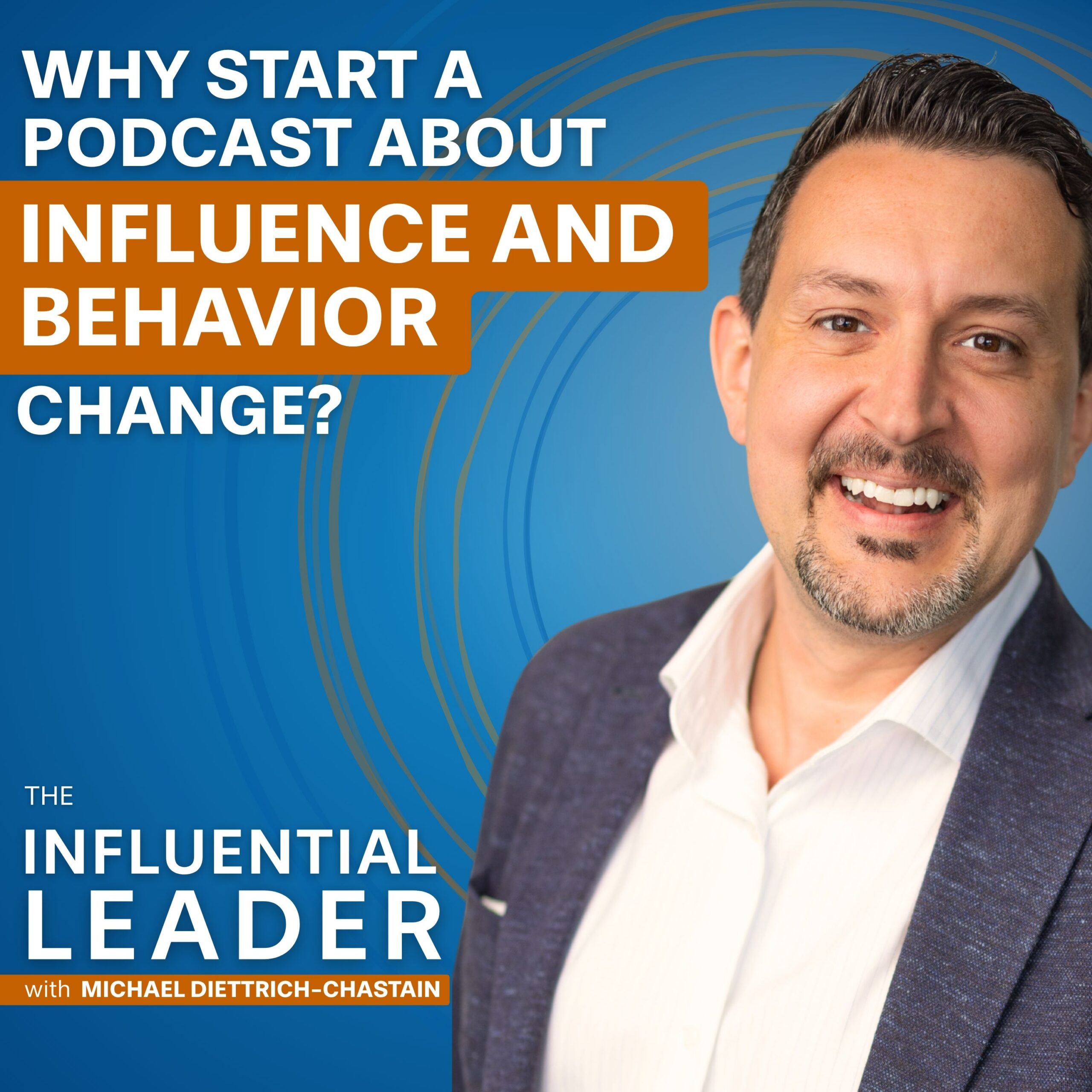
What helps a leader bring out the best in the people they lead? In this introductory episode of The Influential Leader, Michael Diettrich-Chastain shares how his work in psychology, mental health, and organizational leadership led him to that question. He explains why he started the podcast and introduces the idea he wants to explore with future guests: that influence may begin with the questions we ask ourselves and others. Michael also considers why asking thoughtful questions could matter even more as AI makes information easier to access.
Chapters:
- 00:00:00 The Question Behind The Influential Leader
- 00:01:00 Michael’s Background in Behavior Change
- 00:02:00 From Organizational Work to Clinical Therapy
- 00:03:00 Returning to Leadership and Launching Arc Integrated
- 00:04:00 Changes: The Book and Question Cards
- 00:05:00 Leadership Challenges and One Core Question
- 00:07:00 Four Reasons for Starting the Podcast
- 00:08:00 Testing the Theory: Influence Through Inquiry
- 00:09:00 Asking Better Questions in the Age of AI
Quotable Moments
- “We are best positioned to influence the behavior of others, first, through the questions we ask ourselves and others.”
- “They’re very sophisticated question askers. They’re extremely curious. They use inquiry as a tool.”
- “Perhaps what will become more and more valuable as everything is accessible to us is the questions that we ask.”
About the Guest
Michael Diettrich-Chastain is an author, speaker, professional coach and consultant dedicated to peak performance.
Michael is an expert on peak performance in the workplace and is passionate about helping leaders and teams create company cultures of engagement, sustainability, and purpose. He is the founder of Arc Integrated, a leadership development consultancy serving teams and leaders around the globe. Michael is widely regarded by the various CEO’s and leaders he has worked with as the “go to resource” for helping to transform the company cultures in which he works. His writing has been featured in Time, Money, Entrepreneur and The Washington Post and his first book (Changes) which was released in 2019 became an instant best seller in multiple categories. Michael’s mission is to help create and maintain purpose driven organizations that elevate the consciousness of all involved.
Links and Resources:
Transcript
Click here to show transcript
Michael: [00:00:00] Welcome to this introductory episode of the Influential Leader Podcast. I’m your host, Michael Dietrich Chastain, and in this first episode, I’m gonna introduce four answers to four questions And those four questions are: What is the problem that this podcast is intending to solve? What is my background?
Michael: How am I, uh, positioned for perhaps to solve this problem or attempt to? What are some learnings that I’ve had about leadership over the course of a decade plus of work with leaders and organizations around the globe? And then lastly, why another podcast amidst so many? Welcome, and let’s dive in. So the problem that this podcast solves is simple.
Michael: It’s a question that we’ve gotten from leaders over the years. It’s essentially this: How do I, as a senior leader, get the very best performance out of all the employees in our organization? We’ll be solving that through interview style, so most [00:01:00] of these shows will be me interviewing other experts in the space of behavior change, internal company leaders, as well as a variety of experts in the space of psychology, change management, and other fields.
Michael: And you might be asking, what is my background and how am I, uh, equipped to have these kinds of conversations? Well, uh, let me tell you, for my whole career, which is twenty plus years now at this point, that’s a hard number to say, I’ve been studying behavior change in a variety of contexts. And so when I was in college many years ago, I got a bachelor’s degree in psychology, but specifically during that time, I found what’s called industrial organizational psychology, the study of behavior inside the workplace.
Michael: I found this to be very fascinating. When I was in college, studied under a professor and did the internships and did the work to head me into the direction of doing organizational work or what I, what I thought would happen, uh, post-college. And for a little while, I did. For a little while, I worked as [00:02:00] a, a consultant and a, essentially a leadership coach, although I didn’t call it that then, for a company.
Michael: And did this work, managed employees, managed dynamics between employees and leaders, and it was a great experience. And it also triggered an interest to take a deeper dive into the human experience, and so instead of going on to get a master’s or PhD in industrial organizational psych, I went the clinical route and got a master’s in counseling, and then eventually a license as a therapist, which takes thousands of hours of practice, but lived and worked as a therapist for many years, doing a wide variety of jobs, including private practice and community mental health.
Michael: I worked in a crisis world, worked in the community hospital, jail systems, et cetera. Uh, led teams of therapists, and it was wonderful. It taught me a lot about the challenges, strengths, and struggles of the human experience and the complexity of it. After years in that field, I still had this interest and [00:03:00] urge to do work in the organizational world and still had this question around how do teams, leaders, and cultures of companies perform at their very best.
Michael: And so I made a pivot back to that world. And for a few years did work as a, as a bench member, you could say, of various consultancies around North America and was doing, you know, training and coaching and traveling the country, mostly in the US, working with a variety of, of companies, mostly large ones.
Michael: And it was great. Learned, learned a lot about systems of organizations, about leadership, and about the many challenges, uh, that exist. In 2017, we launched our firm Arc Integrated, which is still rolling today. We have a wonderful team and serve organizations, typically mid-size organizations. Our hope when working with clients is that we can create peak performance inside their system for teams, leaders, and their culture And we do that work through coaching, leadership training, strategic planning, and a service called Gathering, where we [00:04:00] bring together large groups of employees to help solve problems and create connections across departments of the organization.
Michael: So that’s a little bit about my background. Over the course of time, I wrote a book called Changes, which did pretty well. It, it’s… I stand by it. It was written in two thousand nineteen, and still very much believe in the concepts inside that book. It essentially covers the seven influencers of how we make, make and respond to change in our life, professionally and personally.
Michael: And along with that, we released a deck of questions, the Changes cards, which have been used across the globe and for a wide variety of purposes. We typically use them in the context of team training or strategic planning. But I get feedback all the time that they’re used at conferences, they’re used at the dinner table.
Michael: The questions spread value in a lot of different contexts. So because I’ve been studying change making in a variety of contexts, from the severe and persistent issues in the mental health world and all the way to the other side of what, what it takes to create [00:05:00] change inside, uh, the workplace, I’ve gathered over the years a lot of opinions and research about how we effectively create change and, and what to avoid.
Michael: And at this point, over the years, myself and team have coached hundreds of leaders and trained thousands of them from across the globe, ranging from major brands that you would very much recognize, and you can see that on our website, arcintegrated.com. That’s arcintegrated.com. And then many small and, and medium sized businesses that you probably wouldn’t recognize.
Michael: But interestingly, regardless of the size or familiarity of, of any company, most leaders are asking a similar kind of question. And even though it shows up in a, in a different way, it’s essentially the same question. And when I say a different way, what I mean is that we often get questions like, “How do I, as a leader, get two teams to work more effectively together?”
Michael: Or, “How do I get this particular VP to increase their emotional [00:06:00] intelligence?” Or, “How do we get this COO to hold people more accountable?” Or maybe at the whole organizational level, “How do we get our culture to get better at having difficult conversations and solving conflict?” And so a lot of variety of different questions, but the, the meta question that I’ve landed on, the, the question that I think is the umbrella question of all of them, is how do I as a leader influence and maybe even change the behavior of those that I’m leading?
Michael: I think that’s the ultimate question as it relates to the people inside our businesses and companies. That’s the big question that leaders are asking. This podcast is an attempt to answer that question. I will tell you, I’m a huge podcast fan, and I’ve been a guest on dozens and dozens of podcasts over the years, and have been curious and interested to launch my own, but ha- but didn’t, and hesitated a bit because I wasn’t quite sure what I wanted to say.
Michael: And now [00:07:00] I’m confident that not only I have something to say, but that it will be specifically valuable. And so the answer to the question, why another podcast, is essentially four. There’s four answers to that question. And the first one is, is it’s we are gonna test a theory on this podcast, and I’ll tell you about that theory in a minute.
Michael: The other hope for this is to learn with and from other experts in the field and to bui- build connections along the way. That’s very motivating to me. Next, to lay the groundwork for an upcoming book. So this podcast will continue to lay groundwork for a book that will, uh, be coming in the future, and I’ll say more about that as time goes on.
Michael: And then lastly, of course, as we go through this process of interviewing various experts, this becomes a resource library not only for our current clients, but future clients as well, and that is valuable and motivating to me. The theory that this podcast is gonna test is an answer to the question, the meta question that I [00:08:00] gave earlier.
Michael: And again, that question is: How do I as a leader influence and maybe even change the behavior of those that I’m leading? My theory and my hypothesis is that we are best positioned to influence the behavior of others, first, through the questions we ask ourselves and others My belief is that this is a radically underutilized tool at our fingertips, is the questions we ask, again, both ourselves and others.
Michael: And that over the years, I’ve learned that the very best leaders, uh, do this extremely well. They’re very sophisticated question askers. They’re extremely curious. They use inquiry as a tool, and this podcast will test that theory through interviewing other experts and asking them the same. Will also say, as an asterisk, about the timing in which this podcast is coming out.
Michael: So here we [00:09:00] are, you know, we’re in the fall of twenty-twenty-six. AI is on the rise significantly. Who knows where we’re gonna be in the coming years? My prediction, and certainly not alone in this, is that information and resource and tools obviously are gonna become more and more available at our fingertips.
Michael: And so perhaps, perhaps what will become more and more valuable as everything is accessible to us is the questions that we ask. And perhaps it’s the questions that we ask that will allow us to be more fulfilled, that will enable our critical thinking, and that maybe even will guide us as we navigate the complex waters of technology and AI.
Michael: And so with that, I welcome you to The Influential Leader podcast. I’m excited to have you along with me in this journey and very curious to see where it goes. Thank you for joining us. [00:10:00] Episodes are coming out every Thursday starting on today, October eighth. We’ll see you again real soon.