Watch the Interview
Listen to the Episode
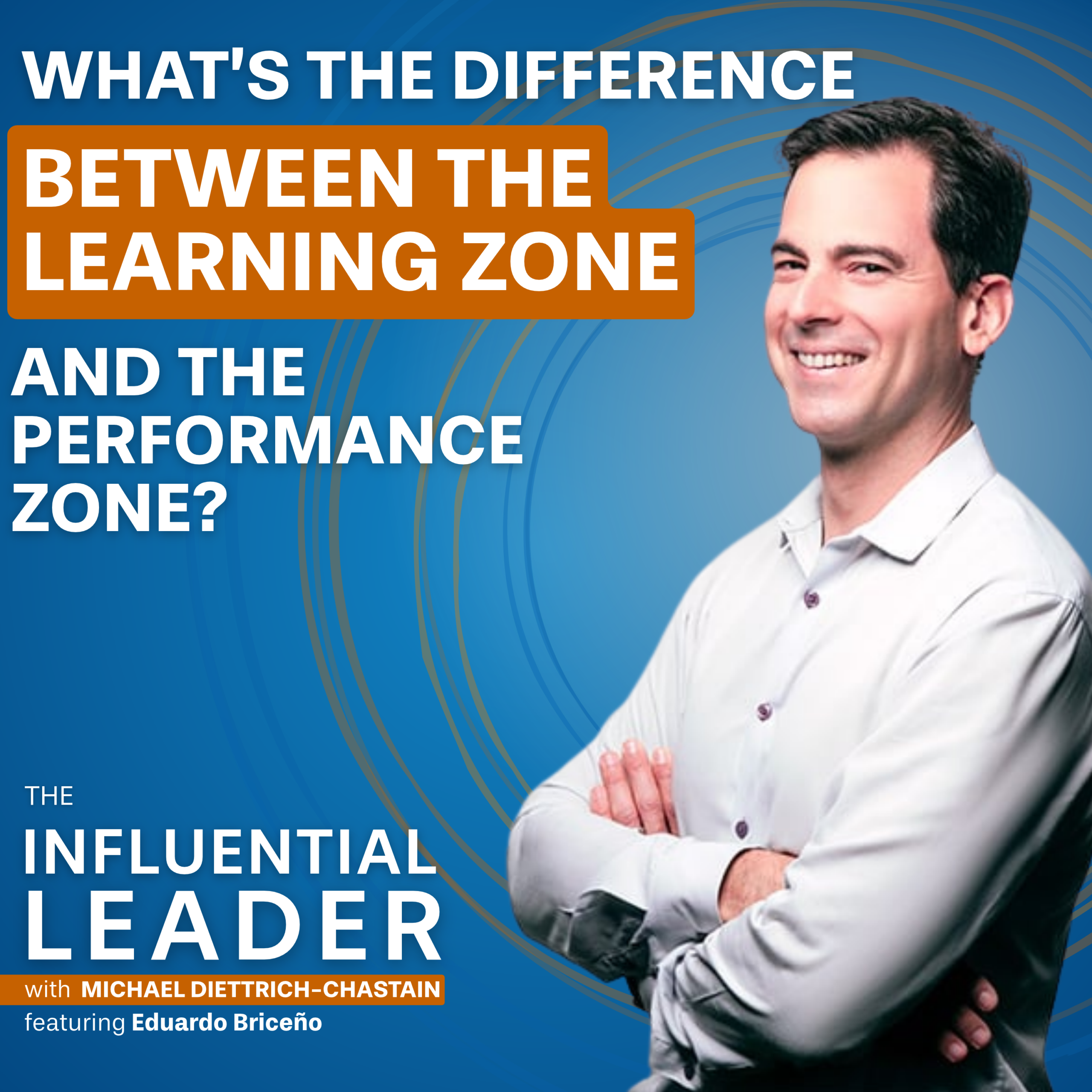
Working hard matters, but it does not automatically help us improve. Eduardo Briceño joins Michael to explain the performance paradox: leaders need time in the performance zone to get things done and time in the learning zone to experiment, seek feedback, and develop new abilities. He shares ways to build learning into work even when time is scarce, from small daily reminders to changes in team meetings. They also discuss identity change, humility, trust, and how leaders can model learning for others. Eduardo closes with a practical question for the AI era: are we using AI only to complete tasks, or are we using it to help ourselves learn?
Chapters:
- 00:00:00 Growth mindset and the performance paradox
- 00:04:00 Personal patterns and leadership presence
- 00:08:00 Identity change, coaching, and AI
- 00:15:00 Humility and learning from others
- 00:20:00 Radical imagination and what limits leaders
- 00:28:00 The performance zone and the learning zone
- 00:32:00 How to make time for learning at work
- 00:37:00 Trust, feedback, and modeling growth
- 00:42:00 Using AI for deliberate learning
- 00:47:00 Influencing through curiosity and better questions
Quotable Moments
- “In order to improve our performance, we have to do something different than perform.”
- “We are creatures of habit, and most likely what we’ll do tomorrow is pretty close to what we are doing today.”
- “The learning zone is an investment of time, just like an investment of money that has a return in the future.”
- “But either way, I’m gonna learn because I’m experimenting.”
- “Our ability as individuals and organizations to continue to change and to drive change is critical in a fast-changing world.”
About the Guest
Eduardo Briceño is a culture transformation partner, keynote speaker, and facilitator who helps organizations build cultures of growth. His TEDx talks have been viewed more than ten million times. Alongside Carol Dweck and Lisa Blackwell, he co-founded the first company to offer growth mindset development services and served as its CEO for over a decade. Before that, he was a venture capital investor. He is now CEO of Growth.how and the author of The Performance Paradox, a playbook for embedding more learning into the flow of work. He pairs discovery and customization with research-backed frameworks, hands-on facilitation, and scalable technology to drive lasting behavior change.
Links and Resources:
- Eduardo Briceño Website
- Growth.how
- The Performance Paradox by Eduardo Briceño
- Hoffman Process
- Presence-Based Coaching
- Mindset Works
- How to Get Better at the Things You Care About — TED Talk
- The Power of Belief: Mindset and Success — TEDx Talk
- Claude Code
- Claude
- Eduardo Briceño on LinkedIn
- Arc Integrated Website
- Strategy Call Page
- Podcast Page
- Michael Diettrich-Chastain in Linkedin
- Michael Diettrich-Chastain in Instagram
- Michael Diettrich-Chastain in Facebook
- Arc Integrated in Linkedin
Transcript
Click here to show transcript
Eduardo: [00:00:00] they have pain points, they have objectives of things they wanna change, things they want to improve. And they think the solution,
Eduardo: what I find most often is go to work and work hard at it. and the paradox is that in order to improve our performance, we have to do something different than perform
Michael: Today on the Influential Leader Podcast, I got to sit down with my good friend Eduardo Briceno. If you’ve ever heard the term growth mindset, which if you’re listening, you may have heard this term before, it has swept the globe in the last many years, Eduardo had a big hand in popularizing this term.
Michael: Along with that, he’s had a number of really interesting and phenomenal accomplishments in his career. Our conversation is wide-ranging, but, a few things that stand out to me in our connection today include how to remain humble in the face of massive success and why this is important in leadership, [00:01:00] the three things that prevent leaders from optimizing their potential, he shares three really important tips there, the science behind why working harder is actually not connected to increased performance, Eduardo unpacks that in a brilliant way, why you as a leader need to know the difference between the performance zone and the learning zone, he explains both of those things, and then lastly, how to teach your AI tool, regardless of whatever platform you’re using, how to teach it to be in both the performance zone and the learning zone.
Michael: I think you’re really gonna enjoy this episode. and with that, welcome to the Influential Leader Podcast, and enjoy this episode with Eduardo Briceno. Welcome to this episode of the Influential Leader Podcast. I’m your host, Michael Dietrich-Chastain, and with me today is my dear friend, Eduardo Briceno.
Michael: Eduardo is a culture transformation partner, keynote speaker, facilitator who helps organizations build cultures of growth. His TEDx talks [00:02:00] have been viewed more than 10 million times. Alongside Carol Dweck and Lisa Blackwell, he co-founded the first company to offer growth mindset development services, which we’ll talk about today, and served as its CEO for over a decade.
Michael: He’s now the CEO of Growth.How and the author of The Performance Paradox: A Playbook for Embedding More Learning into the Flow of Work. Welcome, my friend.
Eduardo: Great to be here, my friend. Thanks for the invitation.
Michael: Oh, yeah, very excited for this. I got a bunch of fun questions for you, which I thought we could start on the personal front.
Michael: And, you have a, a tremendous bio with all sorts of accolades, which we’ll dive into. But if you were to put the professional bio aside and say, what are three things about Eduardo as a human being that would help us, help us get to know you better, what comes to mind?
Eduardo: I am passionate about learning, which, does tie to my professional, life.
Eduardo: But I’ve been spending a lot of [00:03:00] time in personal growth, and just kinda curious and challenging myself, so I, I love that. For me, like personally working on my own happiness, and as part of that kind of the, the relationships I have with other people, the, the impact that I can have in the world, but also like my spiritual growth, that’s something that’s, that’s important to me.
Eduardo: And I don’t know. I, I like to explore. I like to figure out what are things that I don’t know and people that ki- not only people, but also kinds of people that I haven’t been close to, and just go on this life journey that is so, so interesting.
Michael: Very cool. Very rich. Yeah, before we started recording, you shared that you just got back from this intense experience, which I wanna ask you a couple questions about.
Michael: I have heard that this process called the Hoffman Process is something that has been incredibly transformational for a lot of folks that I’ve met over the years. I’ve not done it myself, but, briefly share with us [00:04:00] any specific insights, I’m sure there are many , that emerge top of mind.
Michael: And if you’d like to frame it in the context of how those insights may connect to leadership, that could be interesting. But what, what emerges for you?
Eduardo: Absolutely. So yeah, I, I did this two weeks ago, this thing called Hoffman Process. It’s a week-long process where you, for one thing, completely disconnect from the world, so you don’t have access to a phone or a computer.
Eduardo: You can’t even read anything that’s, outside of the program. You’re just present for a whole week. And, you know, it’s intense. We start, like, morning at 7:30, ending at 9:30 at night, and, like, days are full. and I didn’t know much about it coming into it, but it’s, like, super intense. And, so learned a ton about myself in terms of some, some of the core of it is learning patterns that I developed as a baby that became habits, and I still have, and that served [00:05:00] me for a long time, but n- then no longer serve me.
Eduardo: So becoming more aware of those things, figuring out how to, how to work past them. so, so becoming more aware on those things and how to work with those things and how to change those into patterns that I do want to have was super helpful, and like, as a process going forward,ways of working through that going forward.
Eduardo: but also they teach a framework th- around what they call the quadrinity, which is in, four parts of ourselves: our intellect, our emotional self, our body, and our spiritual self. And, I read about this as part of the pre-work. The pre-work is 10 hours, super helpful. And I kind of intellectually and cognitively understood it, but during the week I experienced…
Eduardo: I never considered myself a spiritual person. I grew up, going through the motions of Catholicism, and I didn’t, never really connected with it at a deep level. And over time, I developed a couple of kind of spiritual practices. Like, I start every day with [00:06:00] gratitude, and that’s the, my most important habit.
Eduardo: But I never considered myself a spiritual person until that week. And I really connected with the part of me that is what I call and what they call the spiritual self. And so it involves kind of becoming really present and leading with my spiritual self that I connected with and having the trust that my spiritual self has the answers.
Eduardo: Like, whatever challenge I have, w- how I want to approach that, you know, my spiritual self can guide me on how to do that. And so when it comes to leadership or being present with other people, there’s a lot of connection there in terms of becoming grounded and present, and that’s a big thing that came out of this, the week for me.
Eduardo: and so that helps us better listen, better connect with people, better be in the moment, and then connect with that higher, part of ourselves that has the wisdom that can guide us in that conversation or in any other situation. [00:07:00]
Michael: Yeah. Yeah. Yeah, yeah. Ama- amazing. Yeah. It reminds me, there was a, there was a guest on recently, Dr.
Michael: Jade Teta, who I recommend people listen to this episode. He, he does a lot of deep work around identity and pattern disruption, and he asked me a really good question, that I’m gonna ask you, which I’m curious your perspective here. He, he… We talked about the nature of this c- really deep work and the nature of a lot of, like, the behavior change work that you and I tend to see in the organizations that we work with.
Michael: And I, and I know this because you and I are friends. We’ve spoken a lot about this over, like, the last few years. And so his question was great. It was, it was like, how much do I see in the leadership development arena that is tackling change in a way that is addressing it the way you’re talking about, Eduardo.
Michael: This, this deep pattern disruption or identity disruption work that, you know, can have a real impact, but is definitely a, a harder lift than some of the more behavior change approaches that exist. [00:08:00] And so I’m curious from your perspective working with a lot of organizations, where do you see this depth of work fall into play in the context of managing change with individual leaders and, or do you see it happening?
Eduardo: Well, I would love your answer as well and your, your perspective on this. Yeah. But for me, so I’m doing this other program that you’re also familiar with called Presence-Based Coaching, and one of the things that they talk about there is the difference between performance coaching and development coaching.
Eduardo: And so performance coaching, they’re all, they’re both great and helpful, but performance coaching is when you are trying to increase your performance, and often you’re trying to develop skills, to meet a particular challenge. And in development coaching, you might do some of that too, but you are also helping the person, evolve our identity, and our ways of being and seeing.
Eduardo: And,and that is, like you’re saying, deeper work that helps us evolve as humans [00:09:00] and also as professionals, in terms of… often, for example, leaders might, might struggle with delegation because their identity might be about kind of solving problems and being really good at that and getting a lot of praise and, and value and reward for that.
Eduardo: And so part of what the shift that you need to do is not just the skill of delegating but also the, the evolution of your identity and, like, you know, what you are about. and so I don’t see a lot of that very often, and there’s, you know, the, there’s also, like, we think about, like, when you think about the development of s- of an adult, you can think about it through stages.
Eduardo: And we go back and forth, and in different contexts we have, different, we might be at different stages, but we might go from just trying to survive and protect ourselves to, you know, another stage might be, like, trying to be successful in terms of, like, just, you know, getting promotions or getting higher salaries.
Eduardo: you know, l- a couple stages up might be, like, making a contribution, right, in terms of, like, making a [00:10:00] difference that is a higher purpose. And then there might be, you know, higher stages which are more, like, even, like, about spirituality, right, and, and how you are. and so depending on,where people are in terms of individuals, where people are in terms of teams and organization and culture,Different mixes of intervention at that performance versus development might make the most sense.
Eduardo: But I think that we can always, continue to grow ourselves. That’s number one. And then, like, keep these things in mind as we are doing– ‘Cause organizations hire us to increase performance, and all of that leads to performance. But then there’s always opportunities to continue to challenge ourselves and the people we’re serving, to continue to kind of progress.
Eduardo: So- Yeah … but I would love your answer to the question that you were asked.
Michael: Yeah. Yeah. It’s great. I, I appreciate your, your con- your context, your deep context. I think I like the idea that, and, and I think this is what you’re saying, I like the idea that, you know, it’s, it’s appropriate to match wherever someone is in their developmental phase.
Michael: that’s, you know, there’s an intervention at that stage. And I think [00:11:00] I’ve ab- absolutely found that to be true. in my experience, I think generally in the training and development world, it, it tends to lean very heavily on, you know, surface level behavior change. And again, not that’s bad. I think there’s, can be great value from that, and particularly around performance.
Michael: I see the, the deeper work happening not only in, in my own experience as an executive coach, but also in talking to a lot of colleagues and clients that have had executive coaching in the past and had a really outstanding experience, that depth work can show up there more commonly. And the other thing that brings to mind is, maybe a bit of a prediction that as AI continues to evolve, AI’s ability to help with behavior change is gonna be tremendous.
Michael: You know, it’s, it’s really already good at creating behavior plans and accountability and challenge and support and all of that. where I think it won’t develop anytime soon is around this deep work that we’re talking about. And my [00:12:00] prediction there is based on the idea that I think for this deep work to occur effectively, it necessitates human connection And I hope that that remains to be true in the in the next, in the next many years ahead.
Michael: But, you know, it– You’re an AI expert definitely beyond me. I know you’re using it in a, a tremendous amount of ways. Do you agree with what I just said a-a-about AI and its limitations or not?
Eduardo: Yes, and. Okay. So I would say that, and, I think we’re both, just like experimenting with AI. I don’t consider- Sure
Eduardo: my, my expertise is around cultures of learning and growth mindset, and I am a, a heavy AI user, like you’re saying. Right. Right. but w-where I think AI could have a really important role, and it does for me, is, so I, I have like a personal operating system in AI, right, in Claude Code, and I use it so much for everything personal and professional.
Eduardo: And so, for example, my AI knows [00:13:00] what my growth edges are, what are the things that I want to, to be working on, and some of those things are shifts in identity. And so when I have… and I, when I ask that I, you know, I want to, “Please help me prepare for this meeting with this person,” like they might do research on the company and on the individual and think about what questions I could ask and what things to connect to, but it might say like, “And remember that you’re, you’re working on this identity, like how are you gonna show up for this?”
Eduardo: And so I think that the seed of the work, I agree, where I agree with you completely, it’s like, as humans,an executive coach who’s a human,can be present with us and can nudge us and connect with us in a way that all of these insights and intentions can emerge, and can challenge it, the AI can challenge too.
Eduardo: But the AI can’t see yet, like- our emotional, reaction, how our body [00:14:00] is at that pr- present moment. And so, a human can see a lot more than just the words that we are saying or typing, and can be present with us to generate, right? In a way that’s a little bit not just kind of scientific and, and language, but also kind of human.
Eduardo: And so- Mm-hmm … but I think out- outside of that, then the person who’s being coached needs to do work, right? In between coaching sessions. Right. And the AI can help with that, I think.
Michael: Mm-hmm. Yeah, agreed. Agreed. Yeah. We, we, we… An example of that, we have this coaching com- community for leaders in our business, and a client was in there.
Michael: We were having a group coaching session, and someone brought up this behavior change challenge that they were asking a question, like, “How do we, how do we get this behavior and actually measure it and create accountabilities and, and small behaviors within it?” And we talked about what if this person just took it to AI, and we talked about various prompts they could give.
Michael: And sure enough, she, she did that, brought it back to the community. It was a 30-day behavior change plan, and it was sophisticated. You know, I thought it was very well mapped out. The AI did a pretty good [00:15:00] job. So to your point, there, there’s, there’s some opportunity there. I wanna talk more about AI, but before we do, just to circle back, a couple more personal questions.
Michael: Would that be okay? Yeah, so and thank you for sharing your, your insights, a little bit of your insights in the Hoffman Process. we’ll link to that in the show notes as well, and I look forward to learning more about that, and at some point we can take a deeper dive. But, the, the next question is, is about, your resume is pretty incredible.
Michael: So I highlighted some things in the bio, but you know, you’ve had 10 million views on TEDx, you have done a ton of Fortune 50 work, you helped co-found a methodology that has had a global impact, and the question is: how do you, how have you done all of this and remained as humble as you are? And, and I, and I’m asking you this for a couple reasons.
Michael: One, I’ve experienced you this way. you know, we’ve, we’ve had a, a good bit of time together, and every time you’re so humble and so present and kind [00:16:00] and, but we also heard this feedback a lot from the folks that we re- you know, got connected with in researching you, which I’ll share more about that in a little while.
Michael: So that theme came forward from them as well. But anything you want to say about how you’ve maintained humility in the face of so much success?
Eduardo: Well, you know, it means a lot to me, that you’re saying that. Thank you for that. And I also would want to ask you the same question ’cause I experience you the same way.
Eduardo: and you’re also, like, super successful, and in many ways, m- further along than I am in, in a lot of different ways. But, for me, I think something comes to my mind is it really is ties– I’m very lucky that it ties to my work. Like- Mm … I am passionate around learning, right? And I’m passionate about reminding myself that I can never be sure about anything.
Eduardo: It, it just so many times in my life I have thought that I’m sure about something and then later found out that I was wrong, right? So, like, that happened enough times that I know now that I can’t be [00:17:00] sure about anything because, you know, I might be wrong. So that, that probability of whether big or small that I’m wrong on anything and that the world is too complex to fully understand, that keeps me curious.
Eduardo: I think it helped me stay humble. And I think, what– just the, the drive to continue to learn and grow I think has exposed me to people, you know, walks of life that I can learn from. So I think I can learn from everybody. and we all are just, like, have such different experiences and perspectives.
Eduardo: I just, I don’t know, I’m just curious to learn from other people. how about you? What, what comes up for you in terms of what helps you stay humble?
Michael: Yeah. Yeah. Yeah, well, o- one thing you said I definitely agree with and try to practice, and it’s m- it’s also a partial answer for me too, and I think this is also an easy takeaway for anybody listening, and it’s the, it’s the simple [00:18:00] practice of embracing the idea that everyone in front of us has something to teach us all the time.
Michael: And I think that, like conceptually, you, you know, you, we may nod our heads and like say, “Oh, okay,” but I think to truly embrace that with every person you come across is a, is an active practice, and I certainly don’t get it right all the time and, and struggle with it, but it’s, it’s definitely something I try to do, all the time, and I think, I think that’s definitely something that, that can build humility.
Michael: And,and you know, and, and like you said, I think all of us are do– You know, in addition to learning from everyone that we come across, I think all of us are also further ahead in some domain in life than we are, and, you know, that’s, that’s a wonderful thing to appreciate too. Whether it’s, you know, personal development work or money or a relationship or fitness or whatever it is, like there’s likely s- whoever’s in front of us, we may be a step or two ahead of them in some domain, and they may be 50 steps ahead of us in something else, and [00:19:00] so that’s a, that’s an important thing I try to keep in mind as well.
Eduardo: Thanks for sharing that.
Michael: Yeah, yeah. Thanks, thanks for asking, man. there’s a fun question I wanna ask you next, and it, it’s a routine we have on this show, which is every guest we talk to, we ask them, “What’s the next question we should ask the next guest?”
Eduardo: Hmm.
Michael: So at the end of this episode, I’ll ask you the same thing.
Michael: What’s the question for the next guest?
Eduardo: Hmm.
Michael: So it’s, it’s a little, it’s a little random, but I’m bringing it up now because you know, what you’ve shared so far, you have a lot of passion for living and a passion for your work, and so I think the question fits here. And so here it is. It says: If you had unlimited time, money, and support- What would you choose to do every day?
Eduardo: You know, I, I am really lucky that what comes up is I love what I do every day, and I, so I don’t… I do it because I love it, and I ha- that’s a huge privilege. So the first things that comes up is like, I’m not like, [00:20:00] based on kind of the, the freedom that I have now and the constraints that I have now, it’s r- I feel like I’m living the way that I would want to, so that’s great.
Eduardo: So in a world… So definitely time is a constraint, right, and, and resources. so in a in a, in a world of unlimited time and constraints. So something comes to mind, but can you ask the question again? Can you ask the question again? Yeah,
Michael: yeah. Sure. Yeah. It says, if you had unlimited time, money, and support, which I think is an interesting kind of caveat to this question.
Michael: Yeah.
Eduardo: Yeah.
Michael: Support. Yeah. you could frame that in a lot of ways. Yeah. You could say, “Oh, I have to have a team of 100 people to do my beck and call on any- Yeah … anything I need,” right? So-
Eduardo: Yeah …
Michael: frame it however you like. Yeah. What would you do every day?
Eduardo: So I would pro- I would spend a lot more time on my third mission.
Eduardo: So every morning I remind myself of three missions. one is to generate and radiate love, joy, and aliveness. and it’s– that– so that’s about [00:21:00] the feelings that I generate for myself and I radiate into the world. The– so that I do. Second is to inspire a world of learners, and I spend, you know, all my work time on that.
Eduardo: And the third, I spent a little bit of time on, I could spend a ton more time on, and it’s like to catalyze radical imagination. And I would spend a lot more time and resources, there. And for me, that is about, bringing, it, it would be amazing to bring a bunch of people, and I do want to spend more time on this over the coming decades, bringing incredible, like people who from diff- all walks of life who are interested in envisioning what…
Eduardo: And this is gonna– this might sound a little weird, but envisioning what the next civilization could look like. So there, there’s, there’s civilizations come and go, and this one will come and go, and the way that this civilization works, is largely, driven by, James Madison, read a bunch of writing that was [00:22:00] written by people who lived in a prior civilization, right?
Eduardo: In a civilization where there was monarchies. And those people who were in a prior civilization, im-im-imagined radically how things could be different. And that’s why we live in the world that we live today, which is amazing. And I feel like right now there is some people trying to imagine what the next civilization is, but not enough.
Eduardo: Like, we tend to just think very short term. And so in bringing people together to think long term and think about what could be different, and if we had better images of the, what that could be, then in moments of transformation that happened, all of a sudden, unexpected, then whoever is the next James Madison could, look at what are some ideas for how things could work very differently, what the social contract could be very different.
Eduardo: and I, I would like, I would spend a lot more time, on that, and resources and, you know, [00:23:00] conversations on it.
Michael: Oh my gosh. Yeah, that’s, that’s so, that’s so powerful. It makes me think, I hope that is happening somewhere right now.
Eduardo: It is. Or in
Michael: a lot of places.
Eduardo: It is to some extent, yeah. Right. Not enough, but there’s- Not enough
Eduardo: there
Michael: are pockets. Yeah. No, that’s really good. Catalyzing radical imagination. Did I get that right?
Eduardo: Yes.
Michael: That’s really good.
Eduardo: Really good. And we can do that, for all, any of us, whether it’s individuals or organizations.
Eduardo: We can think about change as, present forward, meaning how do we improve the present?
Eduardo: and that’s a great thing to do. Like, how do we take what is today and make it better? That’s wonderful. But, so that we can, we might call that continuous improvement. Mm-hmm. Or we can also think about, like, future back. Like, forget what is true today and- Yeah … you know, if we think 10 years down, you know, what would be amazing?
Eduardo: And like- Mm-hmm … forget what’s true today. Like, what would be amazing in 10 years? And then- Yeah … kind of work backwards from there.
Michael: Yeah, I like that, I like that second version, right? It opens up all sorts of possibility. [00:24:00] Yeah, that’s good. That’s good. shifting gears a little bit, as, as you know, you gave us a handful of folks we could reach out to learn more about you.
Michael: We gave them some questions in a survey. They all said glowing things about you, and I’m gonna read a handful of quotes that we got and you… and, and I’ll pose a question as well, and you’ll get all of these quotes back, and excited to deliver you, all of this sentiment. But one of the things that came through was this.
Michael: It says, “Eduardo makes a significant impact with his clients. They see enormous improvements in their ability to develop growth-oriented cultures and work toward their goals while valuing their people. He shifts people from being well-intentioned managers to true leaders.” So I know you’ve, you’ve worked with a lot of companies, very large companies, you know, well-known, like, household brands globally.
Michael: So my question is, in that experience, what do you think prevents leaders from optimizing their potential?
Eduardo: I think a lot of it is [00:25:00] inertia, right? People are really busy with getting things done. And, I would love your answer as well and your perspective- Yeah … but I think, we are creatures of habit, and most likely what we’ll do tomorrow is pretty close to what we are doing today.
Eduardo: and people are really busy. You know, that is time is the biggest challenge that I hear about. and, so I would say that’s number one, right? It’s, it’s just kind of Continue to do what you’re doing because you have too much on your plate, and you can’t, you’re not making the time to step back and, maybe bring somebody who can help you think differently or think at a higher level, and figure out, what is the step function leveling up that you want for yourself or your organization.
Eduardo: Mm-hmm. what, what would that take? But what, what comes up for you? Yeah. What, what do
Michael: you- Yeah, I love
Eduardo: it.
Michael: Yeah, good. Good stuff. what comes up for me is, gosh, we could spend a lot of time just on this question. The thing that comes up, two [00:26:00] words come up. One is tradition, and the other word is assumption.
Michael: And so I say tradition because I think I see a lot in the organizational world of, “This is the way we’ve done it, so we should keep doing it this way.” And I say assumption because I think a lot of times we have… It goes back to kind of our b-belief structures. We have, beliefs about either how a leader should exist or what is possible or what’s within the organization, but also maybe what’s in…
Michael: what’s possible for me or not possible for me. and I think assumption also about how work should exist. You know, what are, what are norms around how a company should treat its people or h-hold values or operate or work together. There’s a lot of assumptions and, some very unhealthy traditions that, you know, have…
Michael: are being disrupted right now, I think, but, but not completely. So tho- those are the hand-handful of things that [00:27:00] come up.
Eduardo: Yeah, that tracks. Thanks.
Michael: yeah, yeah. No, it’s g- thanks for asking.
Speaker 2: You ever wondered what your leadership style really says about you? Are you leading in a way that drives engagement, builds trust, and maximizes your influence? Well, we’ve got a resource for you. You can take our Leadership Influence Quiz, which is a quick three-minute assessment that gives you a personalized insight and roadmap and actionable strategies to improve your leadership effectiveness and ability to actually change behavior.
Speaker 2: The best part is that you’re gonna get immediate feedback with recommendations you can use right away to elevate your leadership game. Just go to leadershipinfluencepodcast.com to get your free report today
Michael: so on this same line of quotes from others, we’ve got a number of other quotes I got from folks that responded.
Michael: Another one that, that is really nice says, “In what realms and what times are we simply performing, trying to do things correctly [00:28:00] rather than allowing ourselves to experiment and learn and improve?” And to create a little color on this, the question here that we asked folks was, “What’s a question Eduardo asks or answers for others?”
Michael: So their response was this question. So, my question for you is this kind of the nature of the performance paradox, this difference between allowing ourselves to experiment and learn and improve? is that kind of the nature of it? And then to take it a step further, I’m gonna give you a lot to chew on here, how do we know if it’s performance or practice?
Michael: So take that in any direction you like.
Eduardo: Sure. Yeah, so the performance paradox, right? So it’s- … it’s the core of my work, and it is the title of my book. And so what is that? So often I find that- What people feel they should do at work is work hard. Mm-hmm. Like, if they show up at work and they work hard, they give their best, that’s success.
Eduardo: That’s what’s gonna lead to [00:29:00] success. That’s what they’re supposed to do. That’s what’s gonna lead to good reviews. And they, what they haven’t realized, right? they, they have pain points. They have objectives of things they wanna change, things they want to improve. and they think the solution, what I find most often, is go to work and work hard at it.
Eduardo: and The paradox is that in order to improve our performance, we have to do something different than perform. we need to, engage in something else, which I call the learning zone, which is going beyond the known, right? So the performance zone is when we are doing things as best as we know how, trying to minimize mistakes.
Eduardo: It’s important. That’s how we get things done. But we also need to engage in the learning zone, going beyond the known, asking questions, trying, new strategies, experimenting, soliciting feedback, reflecting on mistakes, all kinds of things that are different from just getting things done. And often when people, explore this [00:30:00] and reflect on it, they realize, “Oh,” like, we sh- we– I would like for us to be doing a lot more learning zone,” right?
Eduardo: We are too over-indexed on the performance zone. And some people, a few people say, “Oh, I’m spending too much time in the learning zone. I need to spend more time in the performance zone,” and that’s valuable, too. But for most organizations, most people say, “Oh, I’m stuck in just performing, and that’s getting me stuck.”
Eduardo: And, this is kind of what kind of makes growth mindset actionable. Growth mindset is the belief that we can improve, the belief that we can change, the belief that we can develop our abilities and qualities. But what you need to do that and what, what you need to do to improve is to engage in the learning zone and to create learning zone structures and habits.
Eduardo: And, and so in terms of your questions, when you know, when to know you’re in each, we are in the learning zone when we are going beyond the known, and we’re in the performance zone when we are focused on getting things done as best as we know how, trying to minimize mistakes. And we can also [00:31:00] integrate those two, right?
Eduardo: We can get things done in a way that while we’re experimenting, whether in big or small ways, as part of getting things done. Or we are getting things done and soliciting feedback and reflecting on that feedback, so that we can get things done while we improve along the way, which is– it, it involves different behaviors than just getting things done.
Michael: Totally, yeah. And I, and I love the title. It feels so appropriate, “The Performance Paradox,” because I can hear, c-clients and, and colleagues in the back of my mind saying, “Well, there just, there just isn’t enough time to practice.” And I know that you’ve heard that, too, over the years. And so how would you respond to that pushback?
Michael: There just isn’t- Yeah … the time to put in the work and the practice that’s required to get better in their performance.
Eduardo: Yeah. So that’s– To your point, that’s the paradox, right? It’s like-
Eduardo: we can get more things done if we habituate the learning zone. The learning zone is an investment of time, just like an investment of money w- that has return in the future.
Eduardo: And if we feel like we don’t have that time, [00:32:00] then we get stuck and we don’t get as much done. but we feel like we don’t have time for the learning zone ’cause we have too much to get done. So it’s, it’s just a paradox. And, and so what we can do is, first of all, I mean, a couple things. One is if we identify this as an issue for us as an individual that, oh, I’m just stuck in the performance zone, I want to i-integrate the learning zone more into my life, we can think about what do I want to improve at, and what would be, like, if, if things get– feel really hard because I don’t have time, then what would be, like, a really easy and quick thing to do that I could do very frequently, right?
Eduardo: Like every day. Like a very simple thing is, every morning, m- if you– if somebody has a, a, a morning habit of identifying your goals for the day or, reminding yourself of certain things, you can incorporate in that reminding yourself of what you’re looking to improve. that takes, like, 20 seconds.
Eduardo: [00:33:00] and that does– That helps you remember that there’s something that you want to improve, that you’re n- you wanna do something about it. And then over time, it helps your brain, integrate that and think about that throughout your day, not just in the morning. But, like, it just changes your neural networks, and then you start thinking differently.
Eduardo: So you start being more curious, asking more que- more questions, noticing more when other people have different perspectives, noticing when there’s a surprise so you can figure out what you can learn from it. so it starts changing your thinking as you are getting things done, which then doesn’t take more time.
Eduardo: So that’s one. another is If, like most people are in collaboration with other people, and something that’s really helpful is to engage in the learning zone in collaboration with others. And the learning zone is something that people really like and they want more of. And so when people bring others along to this conversation of like, “Hey, here’s…”
Eduardo: And there’s a [00:34:00] TED Talk I did in the learning zone and performance zone, for example. You could share that 10-minute talk with colleagues and say, “Hey,” like, “I thought this was interesting. Can you watch it, and can we talk about it? See how we’re doing on this. can we do better? Do we wanna do better?
Eduardo: What are we gonna do differently?” And then you set the stage for an intention of w- what is one thing you wanna do. Maybe you wanna solicit feedback more. Maybe you want to experiment more. Maybe you want to- Yeah … incorporate in your weekly meeting, like a five-minute section on what people learned the prior week.
Eduardo: So that’s five minutes a week, right? Mm-hmm. That changes the conversation really easily by changing the agenda. Right … so changing the systems, right? Mm-hmm … so that’s something else is like can you engage others? and something else is the systems, like for example, the agenda. if we have an agenda that’s focused only on performance, or if we have a reporting template that is only focused on reporting performance and not on reflecting on what we can improve and what we can change.
Eduardo: so if you change the [00:35:00] systems, then it’s not incumbent on the individuals to remember to do these things, right? It doesn’t take like- Sure … willpower or memory. And the, the last thing I’ll offer on this is, learning while doing. So, like, it’s not… I’m not saying we need to spend an hour learning.
Eduardo: that can be really helpful, but I’m saying that as we do the work, doing s- some even small experiments or things you haven’t done before to always continue to change, right? And so, so that, those experiments can be inspired by the specific project that you’re working on. Like, for example- Mm-hmm
Eduardo: you know, I’m a keynote speaker, so when I’m working in an organization to do, like a keynote or a workshop, I learn about their context, I learn about what they’re interested in, I learn about their specific situation, and then that inspires me to try something that I think is gonna serve this group even better than what I’ve done before, right?
Eduardo: ‘Cause I’m- Mm-hmm … I’m customizing, I’m personalizing, but it’s something I’ve never done [00:36:00] before, and that’s a way to experiment with something new in a way that I think my hypothesis is gonna increase my performance, right? But either way, I’m gonna learn because I’m experimenting.
Michael: Yeah. Yeah, that’s great.
Michael: in, in the spirit of, collaboration, which I think is a wonderful tip, and supporting others in their developmental journey, I’m gonna give you another quote and a question. So this quote is Eduardo’s friendtorship, inside technical term for a friend and a mentor, as they said it, has changed the way I see myself and made me more ambitious and confident in how I engage in the world.
Michael: I’m deeply grateful for every step of having him in my world. So such a, such a heartfelt sentiment. My curiosity is, how can leaders build in others this kind of ambition, potential, and confidence?
Eduardo: I would love your thoughts on this. I, I think it starts with relationships, right? Like, [00:37:00] with, getting to know people, getting to know what they care about.
Eduardo: And I think as leaders or in any other roles in our lives, I think starting with the goals that the other person already has, like what do they care about and what do they want to pursue, and how can we support them or help them think through how to achieve those things that they already care about rather than, than try to change those goals that they have and the things that they care about.
Eduardo: so that’s– And, and then in supporting that, then we can be in a journey to explore better ways to pursue that. And in that growth, then we learn things that we can apply to other areas, and it might uncover possibilities, like assumptions, like you said, that, we hadn’t seen before because we’ve experienced, going about a process in a different way that then we can apply to other areas as well.
Eduardo: So that comes up for me, but what comes up for [00:38:00] you?
Michael: Yeah. That’s great. I totally agree. I mean, I think it absolutely starts with relationship because with- without that, none of the other stuff works. And so where my mind goes after relationship is if that is strong, then our ability to provide feedback goes up.
Michael: And the stronger the relationship, the more significant the feedback we can give, and the more significantly it lands and can be taken to heart. And so I think, you know, with, with that feedback n- you know, not only positive, but constructive feedback, and maybe the, the third one would be feedback on potential, which I think that’s, you know, that’s a…
Michael: that’s what I hear in the sentiment from, from this person that, that, gave you this, this glowing review is like you saw potential in them that maybe they didn’t see in themselves. And I think that a– the ability to do that only comes from deep relationship. And then the, the other thing that I might add to that is, Deep advocacy.
Michael: so [00:39:00] encouraging and supporting that person’s advocacy f- for whatever direction they wanna go, being an advocate for them, and supporting them in being an advocate for themselves. I, I say that because I just have heard, I’ve heard that come up in so many conversations of, you know, very, quote unquote, “successful people” in any domain that a lot of it comes down to, “Well, I w- I was willing to advocate for myself in XYZ ways.”
Michael: So I think that’s a big piece of, piece of the puzzle here as we’re talking about it.
Eduardo: Yeah. That really, tracks. I- Mm-hmm … it also makes me think of something else that is kind of part of my work, which is that, w- it connects to what you said earlier that we can learn from anybody, right? Yeah. So as we are, we’re a leader, we’re, we’re speaking with this person, like knowing that we can learn from them as,as part of it, but also like being intentional about us coming across as a learner.
Eduardo: Because- Mm-hmm … you know, f- it might involve setting the stage for what we want to do together at work, [00:40:00] being evolved everybody, including like senior leaders, right? Yeah. And doing that visibly in front of others, because sometimes leaders might have an executive coach or they might read books or work on their own learning in private when other people are not watching, right?
Eduardo: And so in that conversation, it gives the feeling that the l- the leader knows it all and then the other person needs to grow into like what that leader is. as opposed to that leader also, whether in that conversation or in other ways, like showing that they are also working, at improvement and they are also learning from the other person in other ways and soliciting feedback.
Eduardo: And that also creates kind of the safety and the trust that you’re talking about for, to… And so for example, encouraging like soliciting feedback. So if the, if the leaders, if they’re all agreeing on soliciting feedback, the leader’s soliciting feedback all the time, then that person is, along with everybody else, is gonna be soliciting feedback more often and that’s going to make the [00:41:00] feedback, more relevant, more specific, more timely, and like land better in a deeper way.
Eduardo: So those are, this what I would add is like the modeling learning part.
Michael: Yeah. It’s so, it’s so important. Yeah, I think, often, you know, leaders underestimate the amount of, observation that’s on them. Eyes are always watching for better or for worse. So it’s a, it is a big opportunity. Yeah. Yeah. Well, I, I– we only have a little bit of time left, and I wonder, I want– I really want to ask you some AI questions, and then we’ve got a handful of other rapid fire questions towards the end.
Michael: I wonder if we could turn all the following questions into kind of a rapid fire just so we could get at a few topics. Would you be up for that? Great.
Eduardo: Yeah.
Michael: Yeah? Okay. So I’m gonna read you one more quote that we got in the surveying that we did of, of your connections. It’s related to AI. So it says, “Ed- Eduardo uses Claude in a really interesting and thoughtful way to guide his own work.
Michael: He’s very adept at try- and trying, to use new [00:42:00] technologies. He models the growth mindset of work and the learning and creativity models he writes about in his book, and in his daily life and work life.” So kind of a cross between you’re an A- you use AI a lot, but it’s also an example of how you model your expertise.
Michael: The question is: How should leaders be thinking about AI right now? I know that’s a kind of a vague question, but what comes up for you?
Eduardo: c-certainly,AI is an opportunity, right? Of like– And as a something that’s always continuing to change, so, figuring out, like doing lots of experiments into how the organization can better leverage AI in different ways.
Eduardo: So that might be, having– empowering a group of people or group– people broadly to be learning about AI, experimenting with AI, and sharing with each other so that comes up. The, what I would offer that might be, like, different from what other people might say is that just like the learning zone, performance zone is something that we can think about for [00:43:00] ourselves, we can also think about that when we are interacting with AI.
Eduardo: Both are– So are we using AI just to get a task done, or are we als-also using it to learn? Like the example that you gave where somebody, developed a 30-day plan to work on something on, so that’s one example. But also, are we prompting the system, the AI system, to be in the performance zone or on the learning zone?
Eduardo: Just ’cause the, the, the AI, you, you might have it do something and correct its errors, and then you can ask it like, “Okay, what have you learned in this thread that could be useful to improve yourself?” And then it can reflect, and then you can say, “Okay, go ahead and imple-implement those things.” And so it involves deliberate improvement.
Eduardo: ‘Cause if you, if we just use it, it improves, but just it improves so much faster if we help it do it deliberately. So that’s just something to think about as we, as, in, both as an individual or as an organization, how are we deliberate about improving the AI system?
Michael: Yeah. It’s so good. [00:44:00] I’m taking notes here.
Michael: I hadn’t framed it that way in my mind before, so thank you. That’s really, really good. I hope people take that to heart ’cause I think that’s just, that’s a big opportunity. next question about AI, you know, knowing we– who knows where, where things are gonna go in the next five to 10 years.
Michael: But I’m curious your perspective about leadership competencies. So there’s a lot of them out there that are very important, of course. And how do you think they may change or will they change in the next five to 10 years?
Eduardo: Yeah, and as you say, so hard to predict, right? Yeah. ‘Cause what, what might change. I think one thing that I, I’m pretty sure is gonna, never fully sure of anything, but- Mm-hmm
Eduardo: like something that I think is most likely gonna continue being really important, whether for work or life, is the ability to learn. And like the– just because things are going to be changing and because things are unpredictable, our ability as individuals and organizations to continue to change and to drive change is critical in a fast-changing world.
Eduardo: So [00:45:00] that’s one. I think leaders also like Vision, purpose, like why are we doing what we’re doing? what is the priority? What is important? How do we go about it at a high level? I think that’s something that’s really important because the AI will do what we tell it to do, but like- Yeah … to inspire people and to motivate people and to help us figure out where we’re going- Mm-hmm
Eduardo: uh, that’s something that I think is gonna continue being a key competency for leaders. How about you? What would you- Yeah … what would you say? That’s
Michael: great. Yeah. Lo- love both of those. I totally agree. what would I add to that? I would add critical thinking skills I think are gonna be at a premium, as far as develop- like continually developing them.
Michael: I think similarly decision-making skills, I think that is gonna become tremendously more difficult as information continues to be more plentiful, but also, you know, more, more uncertain of its auth- of [00:46:00] its authenticity. And so I think that like decision-making and critical thinking are gonna be paramount.
Michael: And I also think that the, you know, the human skills are likely gonna be highlighted as more of… The in- the interpersonal skills, things like emotional intelligence, communication, stress ma- management. my hope is that, you know, back to the beginning of our conversation, that some of this deeper work around identity and belief s- structures and, you know, the, the real deep work around developing and tackling, what, what you might call more sustainable change as human beings will become more normalized and, critical for us to, us to work on.
Michael: But we’ll see.
Eduardo: That tracks.
Michael: See if those resonate with you.
Eduardo: Yeah, it resonates. I agree. I would agree with those.
Michael: Yeah, yeah. Cool. so few more questions, and feel free to be brief here. Just a handful left. the first one is, you’ve given us a lot to think about, and there’s a lot of [00:47:00] tips around behavior change, both at the, what might be the, the really deep behavior change and some, and some of the more tactical strategic behavior change.
Michael: If you were to say your best tip for leaders that wanna improve their ability to influence the behavior of those they’re leading, what’s the first thing that comes to mind?
Eduardo: Man, I think influencing is such an art and science. I think getting curious about how can I get better at influencing, and I think it, it depends so much on the situation, but it probably, trust is a big part of that.
Eduardo: So like, how can I improve trust? But I would say getting curious about how I can get better at influencing.
Michael: Yeah, so, so trust and curiosity.
Eduardo: Yeah.
Michael: Yeah. That’s great. All right. Next question, I don’t know if I shared this with you in our conversations previously, but, you know, this show’s called The Influential Leader, and it’s a, essentially a testing grounds, right, to determine the answer to that last question, how do in- leaders influence the behavior of those they’re leading?[00:48:00]
Michael: My theory on this is that the best path to influence is through the questions that we ask ourselves and others. And I would also actually add to that, that based on our last bit of conversation around AI, that that is also a competency that I think is gonna be a premium, is inquiry. And so what do you think?
Michael: How do you think our ability to ask ourselves and others better questions connects to influencing behavior change for leaders?
Eduardo: I agree with that completely. And so I, I think questions are so powerful, and part of it, I think, connects with what I said earlier of helping, like understanding what people’s goals are and- Hmm
Eduardo: that they have a lot of internal wisdom. And so through questions, we can help them think through how to, pursue those goals and what’s working and what’s not working, what they might be trying differently. And if those answers come from them, then they have so much more ownership and motivation and buy-in,to go after it.
Michael: Yeah. I love [00:49:00] that. I love that. I total, totally agree. Totally agree. And I’ve seen that to be true, as I imagine you have as- Yeah. Well, here’s a, here’s a fun one. What question should we ask the next guest on this show? And feel free to go as fun or as light or as deep as you’d like. Anything goes.
Eduardo: Yeah.
Eduardo: Maybe something around, like radical imagination, like if you, if the world changed a lot in the last five years, in the next five years in the best of ways, what could be, a complete… Like what would you… Your highest hopes for, what might be possible in the next- Mm-hmm
Eduardo: five years if the world were to change radically in the best of ways? Maybe something like that. Yeah, that’s really
Michael: good. I’m making a note about that. That’s a great question. I’m excited to ask that one. Thank you. Thank you. Thank you. as we wrap here, do you want to give any kind of call to action around any resource?
Michael: could be your book, could be anything else. And how can [00:50:00] people find you if they wanna continue the conversation?
Eduardo: Sure. people can find me on LinkedIn. my website is briceno.com, my, my last name. And if people want to learn more about Learning Zone, Performance Zone, a resource is my book, The Performance Paradox.
Eduardo: but, you know, it’s been a great conversation as always, Michael, as I would, expect. So thank you so much for this. And thank you for… I love… I have never s- been in a podcast where, they ask people that know you some questions. I- it’s like- Mm … I love the, I love the idea, the strategy, and the execution, so thank you for that gift.
Speaker: Leaders, if you’re listening to this, you’re probably asking some common questions. Questions like, how do you retain top talent? How do you improve engagement? How do you build a culture that people are actually attracted to and want to stay in? And you’re not alone in this. Most leaders are asking similar questions.
Speaker: There’s a lot of pressure around this. The good news is, is that there are clear solutions around how to do these things [00:51:00] well and what to avoid. So for that reason, we are offering a free strategy call. This is a no-strings-attached conversation where we take a deep dive into your business, your culture, your employee challenges, and ultimately identify opportunities that you can take and immediately apply into your business to see results.
Speaker: In addition to that, I’m also happy to share some of the lessons I’ve learned over the course of a decade plus working with all sorts of businesses from family-owned companies to Fortune 100 organizations, and share some of the strategies that I’ve seen be really effective in moving the needle on employee engagement, attraction to talent, and ultimately how to create a peak performing workplace.
Speaker: If that sounds interesting to you, just go to leadershipstrategycall.com/podcast to book your free call today. Look forward to talking with you soon. Thanks so much
Michael: Oh, thank you. Thank you. Yeah, and there’s so much we didn’t get to. I’m excited to deliver to you all the [00:52:00] sentiment that was shared, and yeah, just, you know, glowing, reviews about you, a- as I suspected. So thanks so much for your time, man. I look forward to seeing you soon, uh, hopefully in person here in September.
Michael: Yeah. And,
Eduardo: um- I look forward to seeing you next month in person, and I’m just- Well- … grateful to be in this journey with you, man. You just- Yeah … light up everybody around you. Thank you.
Michael: Oh, thank you, buddy. I, I appreciate it too, man. Well, that’s it, everyone, for this episode of the Influential Leader Podcast.
Michael: And as Eduardo says, maybe the, the final call or invitation, uh, for all of us is to stay in the learning zone. And with that, we’ll see you next week. Thanks, everybody. Take good care.