Watch the Interview
Listen to the Episode
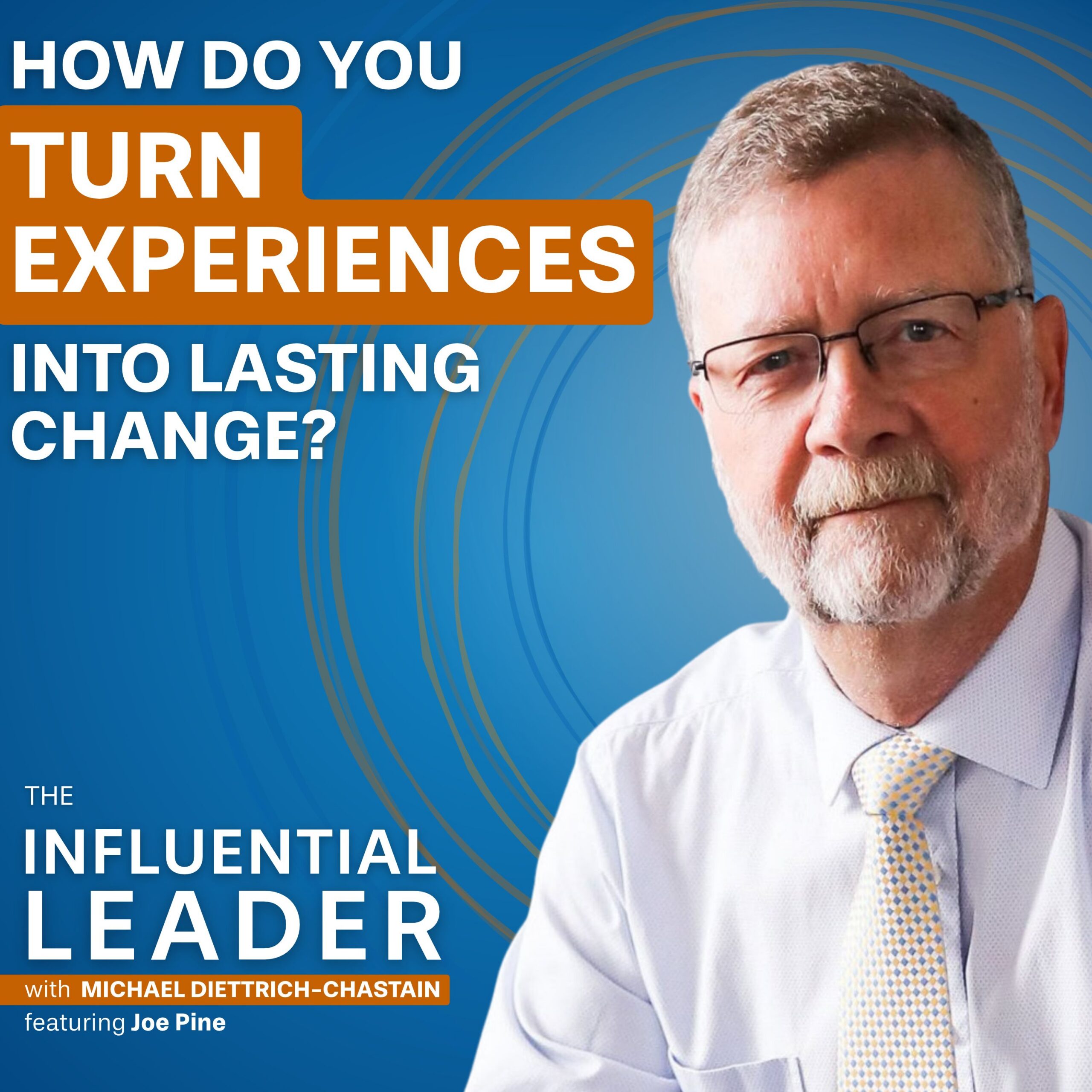
Joe Pine joins Michael to explore what comes after a memorable experience: helping customers and employees make meaningful changes in their lives. He traces the progression from goods and services to experiences and transformations, then explains why how people do their work can matter as much as what they do. They discuss work as theater, employee experience, and the value of a clear purpose when leaders face difficult decisions. Joe also shares how his faith informs his belief that businesses should help people flourish. For leaders trying to create lasting change, he offers a practical sequence: understand where someone wants to go, design the experience, and help them carry its lessons forward. The conversation closes with AI’s potential to strengthen human capabilities and its risk of weakening connection and agency.
Chapters:
- (00:00:00) Introduction: Joe Pine and the Experience Economy
- (00:06:00) How Experiences Become Transformations
- (00:12:00) Work Is Theater: Why How You Serve Matters
- (00:19:00) Building a Universe of Thought and Reading the Market
- (00:26:00) Purpose and Discernment: Staying True to Your Ideas
- (00:33:00) Using Purpose to Guide AI Decisions
- (00:40:00) Human Flourishing as the Aim of Business
- (00:47:00) Influencing Others Through Generosity and Challenge
- (00:54:00) Designing Experiences That Lead to Lasting Change
- (01:01:00) AI, Community, and Better Leadership Questions
Quotable Moments
- “Services are about the what. Experiences are about the how.”
- “Why do you exist in the world beyond making a buck?”
- “You can’t commoditize human beings. We’re unique.”
- “If you make profit the goal, then you’re gonna absolutely do things that harm your customers.”
- “Reflection retroactively increases the value of the experience that you have.”
About the Guest
B. Joseph Pine II is an internationally acclaimed author, speaker, and managementadvisor. Joe has addressed the World Economic Forum, the original TED conference, the Consumer Electronics Show, and South by Southwest. He cofounded Strategic HorizonsLLP to help businesses conceive and design new ways of adding value to their economic offerings. Joe’s latest book is The Transformation Economy: Guiding Customers to
Achieve Their Aspirations, which shows the greatest economic value lies in helping customers become who they want to be; Thinkers50 named it one of the 10 best new management books of 2026. Others include The Experience Economy, Infinite Possibility, Authenticity, and Mass Customization.
CTA:
Read The Transformation Economy and put its ideas, principles, and frameworks into action
Links and Resources:
- Strategic Horizons
- The Transformation Economy: Guiding Customers to Achieve Their Aspirations
- The Experience Economy
- Mass Customization: The New Frontier in Business Competition
- Authenticity: What Consumers Really Want
- Infinite Possibility: Creating Customer Value on the Digital Frontier
- How Starbucks Devalued Its Own Brand — Harvard Business Review
- Employment as Transformation
- Embracing the Employee Experience — White Paper
- The Transformation Economy Integration Resources
- Joe Pine’s Substack
- It’s Called Bastardization — Substack Article
- FieldNotes Newsletter
- World Experience Organization
- London Experience Week / World Experience Summit
- Dr. Benjamin Hardy
- WALL-E — Pixar
- Ed Debevic’s
- Rainforest Cafe
- Isaiah 53
- Psalm 92:12–14
- Joe Pine on LinkedIn
- Arc Integrated Website
- Strategy Call Page
- Podcast Page
- Michael Diettrich-Chastain in Linkedin
- Michael Diettrich-Chastain in Instagram
- Michael Diettrich-Chastain in Facebook
- Arc Integrated in Linkedin
Transcript
Click here to show transcript
Joe: [00:00:00] profit, is the measure of how well you help, foster human flourishing. It’s not the goal. If you make profit the goal, then you’re gonna absolutely do things that harm your customers.
Joe: And I mean that absolutely 100%, you’re gonna do things that harm your customers if that’s your view.
Michael: Welcome to another episode of the Influential Leader Podcast. I’m your host, Michael Dietrich Chastain, and today I got to sit down with Joe Pine. Joe Pine II is an internationally acclaimed author, speaker, and management advisor who has addressed the World Economic Forum, the original TED Conference, the Consumer Electronics Show, and South by Southwest.
Michael: He co-founded Strategic Horizons LLP to help businesses conceive and design new ways of adding value to their economic offerings. His latest book, The Transformation Economy, which if you’re watching this on video is here, subtitled Guiding Customers to Achieve Their Aspirations, was named by Thinkers 50 one of the 10 best management [00:01:00] books of 2026.
Michael: His other books include The Experience Economy: Infinite Possibility, Authenticity, and Mass Customization. I really enjoyed this episode and this conversation. There were a handful of things that stood out to me that I’ll highlight, which include the idea that Joe presents of work as theater and why leaders should pay attention to this.
Michael: He talks about how we engage being more critical than what we do. We talk about this idea of building a universe of thought. I’ll let him explain that part. We talk about why understanding purpose is actually a decision-making framework for leaders. Joe gives three tips for building influence as a leader.
Michael: And lastly, we talk about what keeps leaders from spending more time, money, and energy on em- employee experience and why they should pay close attention to this. And with that, let’s jump in. Joe Pine, welcome to [00:02:00] the Influential Leader Podcast. It’s great to have you here.
Joe: Thank you, Michael. It’s a pleasure to be with you today.
Michael: Yeah. I’m excited to dive in.
Joe: Yeah.
Michael: as listeners heard, you have a tremendous bio that is,very impressive. And you and I were just talking before we started about one of the uniquenesses of this podcast is we go out and survey a handful of folks that you tell us to survey, and the purpose of that is to do a little market research on you and your background and history and gifts and such.
Michael: And there’s usually a, a question that I start with w- with every show, and the question is a little bit about your personal, history that’s not on your bio. Hmm. I’m actually gonna skip that question.
Joe: Okay.
Michael: And I’m gonna give you, a different question that came from our last guest, which is another uniqueness about this show that, and you’re gonna have a chance to answer this, too, which is, what’s a question we should ask the next guest?
Joe: Yep. Yep.
Michael: And so we’re gonna dive into all the, all the things we found out about you and the, and the- … the things that emerged, No,
Joe: I’m starting to sweat. I’m
Michael: starting to sweat. Oh, it’s gonna be, [00:03:00] it’s gonna be fun.
Michael: It’s gonna be fun. but I thought it’d be f- also fun to start with this other uniqueness, which is, the question from the last guest. And so that question is: what makes you feel most alive right now in your life?
Joe: What makes me feel most alive? Well, I would have to say, as it has been for a long time, is, is, going to church, worshiping the Lord.
Joe: I teach in, we call it something else, but, traditionally Sunday school, particularly around Isaiah, for the last few years. And we’re on Isaiah 53, which is, like, the most amazing chapter in the entire Bible. So that excites me to get in there and, and talk about that.
Michael: That’s cool.
Michael: What is it about that particular chapter, Isaiah 53, that lights you up?
Joe: Well, it was written, like, 500 years before Christ, and as- Hmm … as one, one theologian puts it, it’s like it was written at the foot of the cross. Because of how it, like every verse, 15 verses, a prologue, an epilogue, and then, and then [00:04:00] three stanzas, in between, that, that describes exactly, that the, the Messiah, the Christ must suffer and that he, how he died and what it all meant in terms of paying for the penalty of sin that we have.
Michael: and is that, has that part of your life always been a, a through line, spirituality, religion?
Joe: Yeah, yeah, at least since I was 12.
Michael: Okay, cool. That ac- actually came up in one of the, surveys that we did with some of the folks you, you let us survey. So I’ll, I’ll, I’m gonna come back to that notion of spirituality and how it, how it, weaves through your work.
Michael: But,maybe to give folks that, that don’t know about you a little more context. So you wrote these… You’ve written a lot, but two of the books maybe in the most recent years, right, are The Experience Economy and The Transformation Economy, which is right here for folks that are watching on video.
Michael: I just wanna show what it looks like. Hopefully they’ll pick it up. my question for you, Joe, is, again, for those that don’t know a lot, tell us a little bit about each of those books and how are they connected to one another?
Joe: well, the, the… I’ll [00:05:00] start, I won’t describe all the books. There were several between Experience-Guided, Transformation in Kind.
Joe: But the DNA, the core, the core, DNA of everything is my first book, Mass Customization, which I’ve, wrote, started as my thesis at MIT and when I was getting my master’s degree and then completed a book. And I discovered that, well, mass customization is basically efficiently serving customers uniquely, giving everybody exactly what they want at a price they’re willing to pay.
Joe: and,I, I discovered that first that if you look at all the economic distinctions between offerings, that if you customize a good, you automatically turn it into service. ‘Cause goods are standardized and services are customized. They’re done just for an individual person. Goods are, inventoried after production, but services are delivered on demand when you say this is what you want, right?
Joe: Then they make it for you. And goods are tangible and services intangible. Part and parcel of mass customization is the intangible service of helping, people figuring out what they want, right? So it’s automatically turns into a, a service. And I was doing a executive education [00:06:00] back at IBM. First 13 years of my life were at IBM, and they’re the ones that sent me to MIT.
Joe: And, and I, I,was asked the question, the, that somebody said, “Hey, you, you talk about services that mass customize. What does mass customization turn a service into?” And I shot back that mass customization automatically turns a service into an experience.
Michael: But
Joe: whoa, that sounds good. like-
Joe: it’s just, it, it’s, I call it, it was providence, right? It was providence. Sure. God gave me this thing. I said it, and as soon as I said it, I said, “Whoa, that’s good.” Yeah. And, and I went back home and realized that, you… and thought about this some more and realized it’s true that if you design this service that is so appropriate for this particular person, the exact service that they need at this moment in time, you can’t help but make them go wow and turn it into a memorable event, right?
Joe: That’s what an experience is. And so then I realized that, that that meant that experiences were a distinct economic offering. economists identify not just goods and services, also commodities, right? So you got commodities at the bottom, raw material, goods, things, services, intangible activities, and [00:07:00] then service, and then experiences would be a fourth level, right?
Joe: A fourth distinct level of economic offering. And I figured out that one of the reasons it was happening, that we could now… once you see it, you, you, you see it all over the place, right? And, and, and so I saw how experiences were going. and this was back in, early 1994 actually, so we’re talking over, 30 years ago.
Joe: Wow.
Joe: and I also discovered then is that goods,have been commoditized and services are increasingly commoditizing, right? Mm-hmm. So there’s like this, this flow of customization being the antidote to commoditization. Mm-hmm. And so as I then was studying that and figuring that out, I realized, well, then can experiences be commoditized?
Joe: And sure enough, yeah. I mean, the, it may be the easiest economic offering to commoditize ’cause the second time you have an experience isn’t as good as the first, the third time not as good as that. And when you get customers saying, “Been there, done that,” that’s the hallmark of a commoditized experience.
Joe: And I- Mm-hmm … have often said that, that theme restaurants were the first ones to commoditize- Mm … themselves, right? ‘Cause they, they came to view, like even if you have lousy food and poor service, right, just a great [00:08:00] environment with a great experience. Well, no, maybe once, right? But then it’s been there, done that.
Joe: And a- Yeah … a colleague and I wrote a Harvard Business View article, almost two and a half years ago now on how Starbucks, which is always my exemplar or one of the key exemplars of the experience economy, taking a coffee bean, right, a true commodity, working it through goods and services and increasing by two orders of magnitude or more the value of that bean by embedding it in a coffee drinking experience.
Joe: Mm. But they were commoditizing themselves as well. And, and, so, so and that was part of the reasons why I, decided it’s time to write the book is seeing that going on. so then, so I said, “Well, what happens when you customize an experience? What happens when you design an experience that’s so appropriate for this particular person?
Joe: What does it turn that into?” Mm-hmm. And, and, what I realized it was was a life-changing experience, right? As the old phrase goes- Mm-hmm … a life-changing experience that changes us in some way, right? That’s what happens when you design the, the perfect experience. And so transformations, as I ended up calling it, were [00:09:00] a fifth and I believe final economic offering in the progret- this progression of economic value.
Joe: So my partner Jim Gilmore and I call it- Mm-hmm … this progression of economic value. Or using experiences as a raw material to guide people to change, to help them achieve their aspirations. So it was there from the very beginning. We published, “The Experience Economy,” the first edition. It’s on its third edition now, but the first edition was in 1999.
Joe: and, and the last two chapters were on transformations. Right? so it was there from the beginning, although I can’t tell you how many people say, “I read your book, and I’m so glad now you’re talking about transformations,” It sort of surprises me- Sure … when you didn’t read the last two chapters.
Joe: Or you didn’t remember them. Right … because it’s always been there, and I’ve al- Yeah … in my work with c- with clients and, and speeches, workshops, and so forth, whenever appropriate, I mention it ’cause I think it’s obviously even more important than, than experiences are. Yeah. So that’s the, that’s the genesis of everything and why they’re, now these two bookended books, 1999, 2026.
Michael: Yeah. Amazing. and for those, again, that are watching on video, I wanna [00:10:00] just show a visual of what you just described. And, and correct me if I’m wrong here, Joe, but this is the progression of economic- Yep … value that you just walked us through, right?
Joe: exactly. Yeah. That’s it. So it, it, I lo- I just love the parallelism of it, It’s just like…
Michael: Yeah, so this, this brings to mind kind of a random question. So you and I, I think, are both from the Midwest, yeah? It, you know- Well,
Joe: not a… Well, I was org- I’ve, I’m from all over the place, but I moved to Minnesota when I was 11. so
Michael: most- Yeah, that’s right.
Joe: I’ve- … most of the time I’ve spent here.
Michael: Yeah, and you, and you had some time in Wisconsin, right?
Joe: Yep. Yeah. Yeah, went to school there.
Michael: Yeah, I, I grew up in Wisconsin as well. Go Pack Go … my question is, there is a restaurant, it may still be there. You mentioned restaurants- Okay … as a good example of what you’re describing. Yeah. The restaurant is called Ed Debevic’s, and it’s in northern- Yep
Michael: Chicago. Are you familiar with it?
Joe: Yes. Yep, yep. It’s not still there, but yes.
Michael: Okay. So for, so for listeners, what Ed Debevic’s is or was, is you go into this restaurant, and you have an experience, and the experience is essentially the, the waiters are trained actors, actresses that just berate you. Right, right.
Michael: and insult you in, in, in every way. They- They’re just,
Joe: they’re downright [00:11:00] mean.
Michael: Yeah. Yeah. But it’s hilarious, and the reason that comes to mind is that feels like a custom experience that may- Yeah … also be scalable because every time you go in, even though it’s the same kind of structure and, and frame more or less, you’re having a very different experience.
Michael: Right.
Joe: Right.
Michael: So my question becomes, is that, is that a, a possibility? Like, can you have custom experience that is also scalable?
Joe: Yeah, absolutely. So, so, the basic principle that they’re applying at Ed Debevic’s, and I, and I’ll mention the only reason,that, they’re out of business now, it was always a wonderful, wonderful, place,is, after the slowdown in COVID, everything, they just, they sort of discovered that their land was worth more than they could possibly make running the diner.
Joe: so they sold it. So anyway, The, so the principle is work is theater, right? That they’re, they’re, you said they’re trained actors, actresses, and that sort of thing, is that they’re putting on a show and they act in a way that engages the audience. So that’s why the, the original subtitle of the,of the original [00:12:00] edition of “The Experience Economy” was Work is Th- Theater and Every Business a Stage.
Michael: Oh, love that. Okay.
Joe: Right. So it’s,so the easiest way to turn a service into experience, right, requires no capital equipment. It’s just directing your workers to act. And, and it’s ba- and the basic thing to understand, it’s how you do what you do is what acting
Michael: is,
Joe: right? Is, is services are about the what, e- experiences are about the how.
Joe: So, so interestingly, Michael, is that I have a standard bit that I do in presentations when I talk about theater, and it’s Ed Debevic’s.
Michael: Oh, how funny. Okay.
Joe: Yeah. I talk about a time that,my partner Jim and I went there, and we were met at the front by a gentleman, I show a girl a picture, and his name tag says Smiley I don’t know if that’s his, his, real nickname or not, but it’s certainly the character that he played, right?
Joe: He m- meets you with a big smile, he asks you how many people at your table. He says, “Follow me,” and he proceeds to, to lead us through the restaurant,going around tables, going up and down tables, talking to other customers while we cool our heels behind him while he’s asking if they [00:13:00] need anything.
Joe: and then he finally delivered us to our table right back at the front of the restaurant. Yeah.
Michael: W-
Joe: wonderful engaging theater, right? So the h- so the, the what, is take customer to their table. How he did it was wonderful. And in that same trip, to contrast it, I mentioned theme restaurants, is we went to a Rainforest Cafe on that same trip.
Joe: I had a third person with us. A- and he, there’s– they are still around. and he,he, we got led up to the front of the queue, right? The little stanchion there. and, then another guy came along, and he looked at us. He saw how many people are in, were in our party. He picked up the menus, and without saying a word to us, just sort of motioned for him to follow him.
Joe: And he proceeded to lead us through the restaurant with a slow pace, with slumped sh- shoulders, with his head down, right? Shuffling along through there. When he got to the table, he threw his, the menus on the table and turned around and again, without say- s- ever saying a word, just slowly walked away, right?
Joe: And that was a person who didn’t understand that work is theater, unless perhaps he was playing the role of [00:14:00] somebody struck by malaria.
Michael: Yeah.
Joe: So again- Yeah, it’s, it’s- … same thing, task delivered to table, right? How they do it can be great theater, lousy theater, or somewhere in between.
Michael: I love this, Joe.
Michael: It’s work is theater, how versus what. this is the, I think the, the perfect segue into, talking about leadership, and this is… These things seem like they are, and I don’t know if you intend it this way, like the ingredients of a good culture. would you frame it like that?
Joe: So say, so say it again?
Michael: Like what you just mentioned, work- Yep … work is theater, focusing on the how versus the what. Yeah. Like these feel like, and I’m translating it through my own lens- Well, I think- … of working with leaders, teams, and cultures, but these feel like really core ingredients to creating- Right
Michael: a high-performing culture.
Joe: Yep. It was the word ingredients that I didn’t parse, right. Yes. Yes, it is. It is the ingredients to create a, a great culture, to create an experience culture. Mm. you need different sort of cultures for the, the businesses that you’re in, and experience culture needs to be very much one, that is focused on customers, which with experiences are guests, right?
Joe: Mm-hmm. commodities have [00:15:00] markets, goods have users, services have clients, experiences have guests. Mm. Right? What are the… and it’s focusing on them and providing, what I call time well spent. Commodities, good services provide time well saved, which is, again, needs different cultures.
Joe: Experiences provide time well spent. And you’ve got to- Mm-hmm … give your employees, your workers, the wherewithal to create great experiences by providing a great employee experience to them.
Michael: Yeah. And I’m, and I’ve got a couple questions for you about the employee experience. before we get there, I wanna dive into a couple of the pieces of feedback we got from some of the folks we surveyed.
Michael: in this first one, I’m gonna read you the quote directly, and then I’ll follow it with a question. Sure. And, and don’t worry, all these quotes are really nice.
Joe: Okay.
Michael: This first one said- Are they, are
Joe: they anonymous too, or do I have to
Michael: figure out who- They… Yeah, so the, it… Good question. So the, the nature of this show is we’ll, when we, when we read them, live here, they’re anonymous.
Michael: But then as a gift for all our guests, we’ll put together a, a PDF that has all of the sentiment, and that part’s not [00:16:00] anonymous, and the folks that we survey know that. They know that they’re gonna be quoted. So, so here it is. So it says, “I feel the one strength Joe possesses that may not fully be appreciated by others is his ability to be patient when considering ideas that will have possible immense impact on economic shifts.
Michael: So many offer- authors wanna publish for publishing’s sake. Joe steps back and challenges himself to consider, is it worth the effort? Is it time for the effort? And is the public ready for the effort?” So my question, though, is actually about this type of thinking. I find this type of thinking, like, really, really interesting and valuable.
Michael: And so my curiosity is, this type of thinking, maybe you could qualify it as strategic, systemic, considerate of your audience and impact. and again, in my lens and our clients that we work with, these are all excellent leadership qualities. So my curiosity for you, Joe, is how have you developed this kind of thinking?
Joe: that’s a [00:17:00] great question. It,I will, I will say, first I’ll say that the– I, I often summarize this, this by the old, advertising line, I think it was Robert Mondavi, if I remember right, but, “We will serve no wine before its time.” that, that there– that things need to percolate.
Joe: And there is, the– and there are some times where you’re, you’re too early on ideas. I feel that was way, the way with my 2011 book, “Infinite Possibility,” which is about creating customer value on the digital frontier. And, and, and so ti– it’s got a wonderful framework but a complex one that describes all the ways you can fuse the real and the virtual.
Joe: And it seemed like it was probably like 10 years too early before things really got, got going in that. but so partly the reason is I have to figure it out myself, right? I have to know what’s– that I have something right, that it is gonna make a difference, that it is worth, sharing with others.
Joe: I gotta gather examples of it and so forth. and many people told me “The Experience Economy” was way early, and I sort of feel like that was right on time, because,and I [00:18:00] think the reaction to that, that proved it. but I, but I always thought that, p- and people have asked me since then, “When are you gonna write a full book on transformations?”
Joe: And I said, I said, “One, I don’t know enough about it, and two, the world’s not ready for it.” and so I think that i- was the case for a very long time, and I finally decided that the, the world was ready for it. so I think… So, so i- the answer to the question of developing that, that, part of it, I think, was,I, I gotta say something goes back to my applied math degree and, and doing proofs and, and figuring things out in that way.
Joe: Plus, once I became an author, I also had a re- a reaction to people that were coming out with books all the time and, and, and sort of like, well, how much can it be worth, w- worth if you just like, do this all the time, that you’re not really considering things? And it’s, and it doesn’t becar- become part of a, a system, right?
Joe: That it’s just ad hoc sort of stuff, for some of these people I’m thinking of. in my case, I, I humbly call it a [00:19:00] universe of thought, after the Marvel Cinematic Universe, right? Yeah. I’ve got a universe of thought, and it all, it all fits together. It all relates, and you can see all that underpinnings again with mass customization being the DNA at the bottom of it.
Joe: And there’s a lot of things that have been published in books and articles and other thing. Even there’s… I’ve got unpublished frameworks that, on my Substack, for example, that, haven’t, haven’t been published in books, but still I bring them out with clients where they’re particularly needed and, and a useful thing for them.
Michael: Amazing. I love the, the universe of thought. Yeah. And it also strikes me that you have had this kinda through line of thinking for decades, it sounds like.
Joe: Right.
Michael: and that that’s important to you to kinda main- remain, committed to that- Right … through line.
Joe: Right.
Michael: You mentioned something- I, I- Yeah.
Michael: Go
Joe: ahead … I’ll men- I’ll mention too, at heart I’m a proselytizer, right? Mm-hmm. Which is I wanna convert people to this universe of thought. I want everybody to understand what’s going on and how it’s gonna help them create greater economic value, Yeah … for their customers, which creates greater value for their business, which improves the world.[00:20:00]
Michael: Yeah. it tie, it ties so well to the next quote I wanna read and ask you a question about, but I’m gonna, I’m gonna actually, ask you something previously because you, you mentioned something that I thought was interesting. You mentioned about the readiness for transformation. Yeah. Like you feel like the current book, “Transformation Economy”- Yeah
Michael: timing was right. my curiosity is what were the, the signals or the things that you felt or saw or heard- Yeah … that told you the timing was correct?
Joe: Yeah. Well, there’s, a lot of things. transformation was always a big scary word, right? And that’s why, I mean, in business it’s not that scary.
Joe: It’s been talked about for a long time. But on the personal side,it’s a big scary word. So one of the first things I noticed, was the rise of coaching. Right? Over the last 20, 30 years and how that’s just increasing. it used to be just like sports coaching was the only coaching you ever got.
Joe: Then you got life coaching, executive coaching, and speech coaching. You got integration therapists. You got all these coaches which… And you have all these multiplying names for them, right? Coaches, guides, gurus, navigators, advocates, shamans, alchemists. Like [00:21:00] I know some that are alchemists, which I actually use that word,in, in the book ’cause I couldn’t think of a better one, for a particular type of coaching or guiding rather.
Joe: and, and so that was a big deal. A-another one was the, World Experience Organization, which James Waldman founded. he calls me a co-founder. My co-founder,title comes b-basically from him calling me up and saying, “Hey, I wanna create this organization around the experience economy. Is that okay with you?”
Joe: And I said, “Yeah, I’ve been wanting somebody to do that. Okay, thanks.” That’s my co-founder.
Michael: Okay.
Joe: well, we eventually we’d have all these campfires that we do virtually every Wednesday during the school year, and then eventually created the World Experience Summit, and then that’s now become London Experience Week, where London, the City of London has, has embraced the experience economy as part of its strategic pillars that it is doing.
Joe: So we– there’s a week in London dedicated to that. and so as I talked to all these experience designers, to a person, they were all saying they wanted to create transformative experiences, right? It wasn’t just about being memorable. and I mean, it was mostly all after COVID, [00:22:00] but… And, and which was another of the factors as well is that, is that coming out of COVID, obviously people missed all the experiences, right?
Joe: It’s the experience economy that was devastated during that. But when it was,when things opened up, basically everything filled to capacity with the exception of movies because they didn’t have good first-run movies at the time, but, still largely don’t. But they… Everything filled to capacity ’cause we missed those experiences.
Joe: But what I realized is that a lot of it was missing not just the experience, but meaningful experiences. that, that sh- that, that time with our, that time well spent with our loved ones, with our colleagues, with our,friends and families and even complete strangers in large arenas in that.
Joe: And meaningful I always thought was a half step to trans- transformations. And I realized in the writing of the book it’s a third step actually. There’s one other between there. and so I could see where that was leading people to want more, transformative experience and want the, want the experiences sort of impact their lives rather than just be something that they have as a, as a memory.
Joe: and then, so that’s all on the demand side. Then on the supply side, it was seeing [00:23:00] experiences being commoditized. The, the, the, that’s, and that was always the signal when those get com- start getting commoditized, companies are always looking for differentiation that they were going to want to,they, they needed to create new economic offerings that go beyond the experience, and that’s what, that’s what transformations are.
Joe: So those were some, those are some of the major things that, that, that I saw.
Michael: Yeah. It’s, I’m, I’m taking notes. These are, these are great. Yeah. And it, and it strikes me again, just to, emphasize the perfect timing that it seems that AI will continue, and I’m certainly not the first one to say this, but will continue to, increase the rate of commoditization- Yeah
Michael: in all respects.
Joe: Yep,
Michael: absolutely. It’s… Yeah. Yeah. okay. Wonderful. Well, thank you for that. I, I’m gonna take us back to the question about your thinking, another quote. so yeah, I’ll again, I’ll read you the quote and then ask you a couple questions on it. So the, the question we asked, the, this particular person was, what is something unique about the way Joe leads, works, or communicates that might surprise us?
Michael: That they’re responding to that. And this person said, [00:24:00] “Steadfastness.” “Joe has not changed in exercising his diligence and authenticity in how he observes, interprets, and explains what he reveals to the world. He does not get distracted by the noise of the world- … and the bastardization of his ideas that emerge in his wake.
Michael: I’ve known Joe to be the same person since the mid-’90s when we first met.” What a compliment.
Joe: Yeah, that’s very high. It narrows it down, too, of who it was.
Michael: Okay, yeah, right. You probably can, can know who that is, and you’ll find out. Yeah. But,so two questions in follow-up to this. One is about the steadfastness.
Michael: You know- Yeah. Yeah … how do you, how do you remain steadfast in the midst of so much pressure and distraction and grabs for your attention?
Joe: It’s… Right. It gets back to what I said earlier about being a proselytizer at heart.
Michael: Mm-hmm.
Joe: Right? It’s like- Yeah … it’s, I, it’s I wanna convert people to this worldview and get them to understand that, and that requires a steadfastness.
Joe: I remember one of my economic professors, my macroeconomic professor, Shlomo Maital, when I was, got my master’s degree [00:25:00] at MIT, and I, and I, since I worked that whole year on mass customization, right? We talked with him about that and afterwards we still are in contact together. And, he talked about if you wanna move people from here to here, right?
Joe: You gotta talk to them about this, about over here, right? You gotta double, triple, order of magnitude more than what they’re thinking just to get them to move that far. And so it requires a steadfastness to not, to not be,distracted, I guess is the word. Distracted by, the, the idea of the day that’s going on and things.
Joe: And that, and the, and the, the, maybe a little disagreement with the quote is that the bastardization of ideas really does bug me. but I wrote a, I wrote a Substack post on that a, a, like a month or two ago, actually. So it really does bug me that that happens, but I don’t give into it.
Joe: And like, so like maybe I could make more money if I talked about and accepted that CX is the, is the great thing that, that people say it is, instead of saying, “Well, CX just gives you better service. It doesn’t give you a great X, the experience,” right? And [00:26:00] so, and so that’s, that, that bastardization of it.
Joe: And mass customization, it was CEM or, or,CRM, excuse me, customer relationship management, right? And maybe I could’ve made more money if I accepted that term and, and talked about how many could do that. But it really… CRM is really about how do we understand individuals to better sell what we already have, right?
Joe: As opposed to how do we understand individuals to sell them something individual that they really- Right … truly want and need that’s different than what other people have because of, of who they are. So it’s, it’s also just recognizing that these principles are right, that they’re correct, that they’re, that they will lead to greater economic value in the world.
Joe: and what I discovered, and you may get into this later, Michael, but what– the term I discovered for that, I’ve always thought that way, but the terms I discovered in the writing of this book is that lead to human flourishing in the world, right? That’s the raison d’être of business. That’s why it exists, and that’s what these ideas are geared toward.
Michael: Yeah, 100%, and I do have a question about that. the idea of proselytization is fascinating, and I, and I, I [00:27:00] appreciate the value behind it. It makes me wonder, you’ve worked with a lot of business leaders in your career and organizations. I- is that a core competency that leaders should have?
Michael: And, and I’ll, I’ll fill in the blanks. The reason I’m asking that is what it brings to mind is, is the notion of vision casting and creating, a map and a, and a, and a direction for all, all of our employees. And, and that’s, that’s kinda what I hear you saying, this idea of, proselytization is holding true to this, this idea and belief that you have.
Michael: Is that a quality that all leaders should have?
Joe: Yes, absolutely. and I’ll tell you specifically how it should come out in my mind. And it’s o- and, and as it’s often I say Wherever you come into my set of ideas, right? And this is only talked a little bit in them,but, but it’s there and in the next, whatever the next book might be should be there stronger.
Joe: But whatever it is that you’re doing, how you’re approaching this universe of thought,is that you– first thing you do is uncover your meaningful purpose as a business [00:28:00] Why do you exist in the world beyond making a buck, right? That’s what a meaningful purpose is. And, and, and the bastardization of that, probably pre-bastardized is people talk about being purpose-driven businesses.
Joe: but they don’t– but they never say what their purpose is, It’s just sort of like this nebulous purpose, It’s just purpose, right? No, no. What is your purpose? Why do you exist? and that provides a steadfastness that this is who we are. This is what we’re about. we’re not interested in the flavor of the month unless it, helps us achieve that purpose.
Joe: and that-that’s becoming who we want to become, right? And, and ideally a mean-meaningful part, right, become who we’re meant to be as a, as a business. so and I know businesses that, that have kept their meaningful purpose for decades. I think there are cases for a century or more where they have their basic purpose, and that’s what allows them to still be around today rather than be,bought up or, or,go bankrupt or be, sold into pieces and so forth, because they know why they’re there.
Joe: And I, and I use [00:29:00] the word uncover very intentionally because it’s not, it’s– You don’t wanna make it out of whole cloth if you’re an existing business. There already is a reason why, right? But generally you, you don’t know what it is. You don’t articulate it. But if you start thinking about it and understand and looking at your heritage in particular and why the business was formed in the first place, right, you will discover what that purpose is and let that lead you into,what you can do.
Joe: And every… And then everybody knows that if with this purpose, then we, we make our decisions based on whether it helps us, follow that North Star, if you will, along this. So that’s the steadfastness that I think leaders have, particularly by hewing to a meaningful purpose.
Michael: Yeah, I lo- I love it.
Michael: And I just wanna call out for the listeners that I think what you’re… Correct me if I’m wrong, Joe. I think you’re giving a call to action here, which is- Yes … if leaders that are listening don’t have a sense of their company’s purpose- Right … perhaps that’s a to-do. Right. And that it will allow them-
Joe: No, no, no.
Joe: That’s, that’s the to-do.
Michael: That’s the to-do.
Joe: Not a to-do. [00:30:00] That’s the to-do.
Michael: Love it. Love it. Yeah. Yeah, so- I
Joe: mean, have you, have you, have you seen that in your work with leaders? that where… Have you worked with companies that have a meaningful purpose that don’t ha- or don’t have a meaningful purpose?
Joe: Have you seen a difference there or…?
Michael: 100%. Yeah. Absolutely. And I think to your point, it allows… Like I, I kinda frame it in my mind as a decision-making framework.
Joe: Mm-hmm.
Michael: You can have, if you have- Right. Right … clear purpose, it allows you to make decisions more easily, and I’ve seen- Right … I’ve seen both sides of that.
Michael: Yeah. The lack thereof leading to confusion and- Right. Right … with it leading to discernment. Yeah. And it, it’s a good segue to the next question, and I, and I think you may have answered this, but I don’t wanna, I don’t wanna assume, so- Let,
Joe: let me, let me pause just a second. Yeah, sure. Yeah. you had such a great word there, discernment.
Joe: That’s what leaders need, discernment, right? Yes. With all these things coming at them, from every direction, they need discernment, and that– and you need a worldview, a, and a meaningful purpose to really have that discernment. it doesn’t happen by accident. It grows,as you follow your purpose.
Michael: Yeah. And is that part of your work, Joe? Like have [00:31:00] you gone into organizations and helped them define what that purpose is? Is that part of what you- Yes Okay.
Joe: Yeah, I’ve do- yeah, I’ve done that for another companies to the extent of writing a manifesto or a declaration. That declares what this is.
Joe: So yeah, like you- Excellent … I like coming up with, very short, ideally three-word purposes. Make them easy to remember, just easy to state, easy to follow. Mm-hmm. and then, but then put the meat on the bones with a page and a half or two of prose that describes what it’s about and who we are, and then that’s something- Mm
Joe: you need to promulgate to the entire organization and inculcate, sorry for all the big words- Mm-hmm … and inculcate- No, that’s good … the organization, into that so everybody understands, understands that. And then you may find that some people leave ’cause they don’t fit. Their personal purpose of why they exist doesn’t fit with that, and that’s fine.
Joe: Yeah. and, and then when you hire people, you need to make sure they know from the f- get-go, “Hey, this is– Don’t come here unless you can ascend to this proposition,” right? “‘Cause this is who we are.” Yeah. “This is what we’re about.”
Michael: Yeah, awesome. A lot, again, it allows discernment, right? Allows clarity around- Right
Michael: who’s, who’s with us and, and who isn’t the, the right fit. so the next [00:32:00] question, and a- again, you may have answered this via the purpose answer, but how do you evaluate whether something is just a distraction versus a helpful way to evolve your own thinking about this?
Joe: Yeah. it is a great question. I mean, purpose does come into that.
Joe: if it,fits with your purpose, then it can be. The, the other thing to think about, is to recognize that, the so-called first mover advantage has proven not to be an advantage , right? It’s often not the, I mean, more often it’s not the first company, that does something. So you need to understand how it, how it helps you fulfill your purpose, how it helps you create va- greater value for your customers.
Joe: You see this so much with AI, today. As people said, “All right, just go use AI.” Okay, well, that’s a good direction. Go use AI, right? And, and if you start measuring how much AI they’re using, guess what? You’re gonna get lots of AI being used, but it’s gonna be drivel, right? You need to say, you need to say, “Okay, [00:33:00] how can we best use AI?”
Joe: Right? Obviously, it’s too big a thing to ignore, but it’s not just about doing AI, it’s about understanding, okay, who we are, h- what is the best way to be able to use this? particularly if you are an, I was gonna say enlightened leader, it sounds a little too airy-fairy, but anyway, but if you are a leader with discernment, we’ll say, right?
Joe: is to,is to understand that, it- AI is not about how it was so often presented about automating people, about getting rid of people, right? which is a race to the bottom eventually. It’s really about IA, intelligent augmentation. It’s about augmenting your people and increasing their skills and abi- abilities, increasing their capabilities so that they can do more, not thinking about, “Okay, how are we gonna replace these people?”
Joe: Right? That’s, that’s just, just a, a wrong mindset. I mean, yes, it may happen that you– turns out there’s things that can be done much more effectively and done on an ongoing basis, and so we can take those people and hopefully move them to something else. But for the most part, [00:34:00] it’s about taking advantage of their skills and abilities and increase their capabilities through the use of, of, intelligent augmentation, IA.
Michael: Yeah. Yeah, I hear you, I hear– One of the things I hear you saying with, with this idea of how to evaluate distraction versus thinking of evolution is really to slow down and study versus maybe act quickly. Is that- … is that part of, part
Joe: of
Michael: it?
Joe: Yes. Yeah. Yes, yes, yes. Yeah. Slow down, slow down to act quickly, ’cause then once you understand it- Hmm
Joe: and once you brace it, then you can say, “Okay, now we can move quickly,” ’cause we’ve- Okay … done our thinking, right? there’s been a lot of research and a lot of, There’s an old saying for it, I’m trying. I think it was Einstein that said and I, I could be wrong, but you said, “If you give me, if you give me two hours to solve a problem,” or whatever the time is- Oh, yeah
Joe: I’ll spend an hour and 55 minutes on framing the problem and truly understanding it, and then the last five minutes on solving it.”
Michael: Yeah. Now,
Joe: he’s a genius, so you may need more than five minutes. But- but the basic idea is, is that’s the way to go, is to, is that’s discernment, is understanding what the issue is and fully before you act, and [00:35:00] now, then in a way that’s gonna create value.
Michael: Yeah. So good.
Speaker 2: You ever wondered what your leadership style really says about you? Are you leading in a way that drives engagement, builds trust, and maximizes your influence? Well, we’ve got a resource for you. You can take our Leadership Influence Quiz, which is a quick three-minute assessment that gives you a personalized insight and roadmap and actionable strategies to improve your leadership effectiveness and ability to actually change behavior.
Speaker 2: The best part is that you’re gonna get immediate feedback with recommendations you can use right away to elevate your leadership game. Just go to leadershipinfluencepodcast.com to get your free report today
Michael: couple more quotes from folks that we surveyed that I think you’ll enjoy. So the next one says, “Joe, when teaching, communicating, and leading others, has the unique ability to weave his s-spiritualism and faith in his work without using it as a soapbox for his ideas. You understand that his ideas may be focused on economic [00:36:00] offerings, but there’s a sense of purpose guiding him.”
Michael: So back to the purpose. Right. “To create the idea that business should be about human flourishing only accentuates this.” So, and we mentioned some of this stuff already, but my curiosity here is, one, is this a fair representation to how you feel, of course? And then two- Yes … tell us more about how you believe businesses can and should be about human flourishing.
Joe: so I f-I do find myself as I get older,being more upfront about my Christianity and about how it does intersect with people’s lives, and therefore with, with business itself. I didn’t used to say, for example, that when I said, mass customization automatically turns into service and experience, right?
Joe: I used to say, I used to say, that, it, it just came out, right? Now I always say it was providence, and I believe it was. It was providence, right? God gave me that, to create, these ideas that will ultimately lead to better human flourish in the world, which is one of the things [00:37:00] that, that God wants in this world.
Joe: And, one of the things I always do, I, I, when I told you either about the pr- earlier about the progression of economic value, I said it’s the fifth and final, and final economic offering. I always try, I always try to say, “And final,” so people will ask, “Well, why is it final? Isn’t there another one after that?”
Joe: Right? And to which I have a standard response, that I’ll, I’ll do quickly, but that, one, you can’t co- commoditize transformations the same way you can other economic offerings, ’cause the customer is the product, and you can’t commoditize human beings. We’re unique. In Christian terms, we have Imago Dei.
Joe: We have the image of God in us that makes us all unique. You can’t be commoditized. and if you customize a transformation, the only thing you think of is, is more and more transformations, until, until you got to a point where you would perfect somebody, so there’s no more need of transformation.
Joe: The only thing I think can go beyond that, and that’s not the, the province of mankind, that’s the province of God, right? So I like to say that as well. so it i- and, and, and, and there’s a lot of influence in, in, in that, and hu- and human flourishing’s one way. hu- human flourishing, [00:38:00] people really always relate back to Aristotle But the, it was great.
Joe: Used the Greek word eudaimonia, if you ever heard of that, is, right? It used to be translated happiness, and they finally say, it’s so much more than that ’cause it’s, it’s really about how you should lead your life, right? That you leave a good l- you live a good life, and that’s, that’s eudaimonia, and so human flourishing is what that is.
Joe: But, a th- 1,000 years before Aristotle, the Bible talked about human flourishing. I like, see if I remember that, Psalm 92:12-14, the,righteous, flourish like the palm tree and grow like a cedar in Lebanon. They are planted in the house of the Lord, and they flourish in the courts of our God.
Joe: Th- and this last part means particularly to me more and more lately, is they are still, ripe in old age, and- Yeah … are ever full of sap and green, right? Which is a great description of flourishing. You’re, you’re green. You’re constantly growing and, and building up and up. Christian word is edifying, which often you say.
Joe: You’re edifying means you’re building people up. And as businesses, we need to edify people. We [00:39:00] need to not be the, the big opposite word is deleterious. We need to not break people down, but edify them, both our customers and our employees, the communities that we work. And that edifying is mean helping them have greater and greater levels of human flourishing.
Michael: Yeah. Yeah, yeah. Yes, it’s, so similar. We often will say our belief around working with businesses, that they’re the best catalyst for change-making in our- Absolutely … in our larger culture. And-
Joe: Th- th- right. They’re the greatest force for good- … that, that we’ve ever invented is, is- Yeah
Joe: people deride the term capitalism, and there’s a good reason to deride it. Deirdre McCloskey uses the term innovism. It’s all about innovating, right? And that’s where the US- Mm-hmm … why we lead everybody else is we innovate better than everybody else. And so capitalism has taken us where 99% of the people were in poverty to where very few, percent of people are in, in true poverty.
Joe: They’ve always changed the definition of poverty as we have more. Yeah and capitalism is the greatest force for human flourishing- Mm-hmm … in making that, that [00:40:00] happen.
Michael: which, maybe is a, I’m gonna put my hat on to any listener- Yep … that may be having some skepticism at the moment.
Michael: Like, well, aren’t we, aren’t businesses, supposed to make money, and- Yep … isn’t that the point? And, and to that, to that end, what I would say back is there is so much evidence that if we create flourishing systems, we, our- Right … our profit goes, way up too. Right. Right. Is there… To that end, Joe, is there anything you wanna comment on related- Yeah.
Michael: So- … to how flourishing systems, are, are-
Joe: Right. …
Michael: both economically impactful?
Joe: Right. So recognize the raison d’être of business overall, right, of capitalism overall, from time immemorial, is to foster human flourishing, right? And you can go back to Adam Smith and, and where he talked about that the things we do to, to h- have a living ourselves are to the benefit of others, and they bo- and they wouldn’t bene- they, they wouldn’t benefit unle- or they wouldn’t recognize that if they didn’t pay money, right?
Joe: So the money they pay to you, the value of what you give them has to be better, more than that money that they have in their pocket. Sorry, I didn’t say that very well. But, and so when [00:41:00] we do things that, that, that we do in our business to create offerings, we’re benefiting humanity, through that.
Joe: and so, and so the raison d’être of every individual business is to foster human flourishing. And if we recognize that, we would make more money. But money, profit, is the measure of how well you help, foster human flourishing. it’s not the goal. If you make profit the goal, then you’re gonna d- absolutely do things that harm your customers.
Joe: And I mean that absolutely 100%, you’re gonna do things that harm your customers if that’s your view. So you have to focus on benefiting your customers, and then the profits will come, as you say, in, in, in flourishing systems. Flourishing systems, you th- I mean, the wonder- it’s a w- such a wonderful word of blooming and bounty that come, that, that comes out of it, and that applies to everything when your focus is on, on flourishing.
Michael: And would you say the same… you talk about focusing on the customer first versus the bottom line. Would you say that, customer and employee, or would you see those two different?
Joe: Yeah. w- yes. [00:42:00] I, I’d even, I’d go even go a little farther. So I’d say yes, you… So it’s number one is the customer, but number two is the employee, right?
Joe: if you’re fostering human flourishing among customers but detracting from it with your employees, right, that’s not a good business, right? And that’s, that’s,that’s, speaking out of b- both sides of your mouth and being hypocritical. So you absolutely have to do it for your employees.
Joe: It doesn’t mean you can never lay off anybody or never fire anybody or never change what you’re doing and so forth, but you have to do it with a mind towards how can we benefit this person in the process of doing that? It’s gotta be at the table of every decision that you make. and then, but it extends to the communities in which you reside as well, that you need to help them flourish.
Joe: You need to be a positive impact on the community. Again, not a negative one that’s detracting from the human flourishing of people behind you because you’re polluting the water or, or around you because you’re polluting the water and, and so forth. and then I, it would extend to society and to the planet overall.
Joe: and but let me be very clear, Michael, is that I’m not talking about stakeholder capitalism where they, all these things have rights on you, [00:43:00] right? It’s not… I think it’s a, I think it’s a bigger, it’s a bigger deal that they don’t have rights to you, but you have a responsibility to them. And if you feel the responsi- if they, if they have rights on you, you, you, it’s always an antagonistic relationship, right?
Joe: But if you recognize you have rights on them, it’s a positive relationship, and I think, and every business needs to understand that, and again, the, the profits will flow from that mindset.
Michael: Yeah. Makes sense. l- let’s take a couple questions around, well, employees specifically, and influence specifically.
Michael: So I’ve got one more quote to read to you and then, and it’ll lead me into an influence question. And-
Joe: Okay …
Michael: the, the quote says this, again, talking about you: “The one thing I appreciate the most, and there are so many things to share, but the one thing is this. There have been very few people who have influenced my life on course and intent as Joe.
Michael: As an illustrator and communicator in visuals, Joe has been the stone tossed into my pond of thinking.” “And, and the ripples will [00:44:00] forevermore continue to spread and get reflected back from all directions.” And I- I– it’s a beautiful, a beautiful sentiment, and it reminds me of just how you’ve had such a positive- That one brings
Joe: a tear to my eye, Michael.
Michael: Sorry, say again? That
Joe: one brings a tear to my eye.
Michael: Yeah, yeah. me, me too. I mean, that’s quite a,
Joe: quite a statement.
Michael: It is. It’s beautiful. Yeah. You’ve had such a positive influence, and if we zoom out, my question is how? how– for leaders that are listening that wanna have others, maybe employees or those that they’re mentoring, look at them the way that this person looks at you, how would you suggest they build their ability to be influential?
Joe: Wow. So- I’m not sure I’ve got a good answer to that, Michael. it’s not something that I, focused on per se. but I w- but I would say that,it is thinking of the other people and not just about [00:45:00] yourself. and the, the p- I, I know the person who gave that quote, and I make a lot of demands on him.
Joe: and and I know he’s gained a lot out of it, but I also think,that maybe I don’t do enough to think about his own,flourishing as part of that. But I know that, that a lot of that happens. But it, it– so anyway, it,it gets back to that as to, as to thinking on behalf of other people, thinking the best of other people, thinking of what,value can provide.
Joe: It’s… One of the things I learned early on,is to give as much as, as I can, of my time to others. There’s, there’s times, particularly when I’m writing books and like even now where I think, “Oh, do I really wanna talk to this person? Do I really wanna have that meeting?” but, I know that, that it prevents me from doing other things that I wanna do, but it is one of the things that,that I can benefit the world by, is by helping people.
Joe: and, help, and they’re calling because they look up to me and, and like the ideas and want to be able to embrace them in some way. So I do try and a- accept those as, much as [00:46:00] possible.
Michael: Yeah. Well, tha- yeah, thank you. I mean, it’s… You’ve, you’ve obviously made a big impact on a lot of lives and, and I took notes, the things that I heard you say, you know, thinking of others first.
Michael: I heard you say also maybe challenge them to a certain degree, and giving as much as you can possibly give. did I capture that right?
Joe: yes. And, and the challenge is important part. There’s a lot of people that I’ve challenged to think more. I, I, I remember one person who,went… people I, both people I’ve known for a long time.
Joe: Both people love experiences, and one of them went to work for another one of these same people in this group. and we, I, I spoke at an event that, that they did, and he said to he, he sat next to him at one point, sat next to me at one point, and he said, said I,that, he said, “I just love how,” to, I’m paraphrasing, “I just love how I’m able to help this person, do what they wanna do and, and build what they wanna build and how it’s just so, so wonderful in that, that I can, I can help that person.”
Joe: and it again, providence, the [00:47:00] first thing that came to my mouth is, what about you? What do you wanna do?” Right? What’s, what’s, how, and, and how can, how can I help you do what you want to do? and it did cause him to shrink that and go back and get a chief experience officer job, actually,in, in the field that he was in.
Joe: So I just thought that was good, so.
Michael: Yeah. We need, we need folks like that in our lives, right? That will push back on us. so the couple other questions around the employees. You had sent me, when we were preparing for this, you sent me a couple articles, one of which was employment as transformation, which was great, and in that you talk about these three, levels of employee transformation: diagnosis, experience, and follow through.
Michael: And I’m, I’m just curious to, to hear you walk us through that, and has your thinking evolved at all since you wrote that?
Joe: Yeah. So, so I originally wrote that back in, ’98 or so ’cause, ’cause it was the f- core framework of the transformation last two– the, the ninth chapter of the book,where to truly affect a transformation, you need to diagnose who they [00:48:00] are and what they want to become.
Joe: and from there, then you can design a set of experiences that will take them from who they are to what they wanna become, and, and, and, go there. And then follow through is where you then, help them sustain that through time, right? And that’s key is it’s, if, if I go through a smoking cessation quote, program for six weeks and I quit smoking, but three weeks later I light up again, I wasn’t truly transformed.
Joe: And so many companies sort of like wash their hands after the initial transformation instead of staying with them to effect that. so one of the things I, I changed in the, in the new book is I changed that, a middle wa- box from experiences or stage experiences, I think we had in the book, to encapsulated experiences.
Joe: So encaps-encapsulated experience. Encapsulation is one of those things I discovered in the book, in the writing of the book that is so meaningful. It’s like the way to turn any experience, almost any experience, into a transformation. and it’s very well academically researched, and I didn’t invent it.
Joe: A lot of com- a lot of people do it [00:49:00] naturally, but I just simply put this word on it and sort of defined, and what it looks like was the capsule, right? Is you take the experience and you encapsulate it with preparation beforehand, reflection afterward, and integration on an ongoing basis. now that also is that three phases writ large, right?
Joe: Diagnosis is the preparation. You have the experiences. Integration is reflection or follow through is reflection integration. But every one of those, those, experiences that you encapsulate, it can get people thinking about it, and reflection, retroactively increases the value of the experience that you have.
Joe: Just get them thinking about the highlights of it, and they’ll forget the lowlights of it. and, and then you, and then you reflect in a way that says, “Okay, well, did this have an impact you, on you? Is this something that, you want to change because of that experience? and how might you go about doing that?”
Joe: And then, “Okay, here’s how we can help you do that,” gets into the, the integration. I’ve also, in chapter seven of the book, the last chapter of the book, deepened each of those, and there’s m- much more describe how diagnosis and encapsule experiences [00:50:00] need to be mass customized, for example, that you need to, that you need to sense and respond ’cause it, all, your transformation journey isn’t monotonically increasing, from here to here.
Joe: y- Yeah … there’s, there’s regress as well as progress, so you need to sense and respond to, to what’s going on.
Michael: Yeah. It’s, it’s so good, and I, again, for the listeners, just wanna call out b- because I don’t know if this is obvious for folks that are listening, but what you just outlined for us, Joe, in, in our world, we would describe that as an ideal training framework or coaching framework, right?
Michael: So, and I say this because a lot of, of our clients and listeners and leaders out there, they’re asking that question, “How do we effectively change behavior maybe through training or coaching or some kinda mechanism of learning?” And you just outlined the ingredients for that. and they’re often missing, particularly the front end and the back end, I see, that, that are missing.
Michael: So thank, thank you for that.
Joe: And then, and it’s something, something that I still struggle with because, like, I’m the classic sage on the stage when I give a speech, right? And, [00:51:00] and I like doing Q&A, but I always feel like, if you gave me a little more… I, all my, every time I design a presentation, it’s always longer than it needs to be.
Joe: This is what I think this group needs to do, knowing how long it’s worth, 30, 60, 90 minutes, whatever. But I always have too much, and I gotta cut it down, and I always think, “Oh, if I had more time.” so, so, trying to do that preparation and reflection at least in there. So I try and do things beforehand for the preparation if I can, but even get people just thinking and, why are they there?
Joe: What are they looking to accomplish? And then do some reflection at the end of getting them talk to each other can make a huge difference, in that, and it’s something I struggle with ’cause my desire constantly for more time with them. So I assume that, is it, is something that you, have you, you’ve done this sort of like naturally as well?
Joe: Or is there a-
Michael: I mean, I, I w- maybe not naturally. I, in the earlier part of my career, so I… Long story short, I started in corporate, with an undergraduate degree in psychology with emphasis in industrial organizational psychology, so the, how, basically the work we do today.
Michael: I got job in corporate and [00:52:00] then worked, made a pivot and went into the mental health arena. And so I became– got did that grad school, became a licensed psychotherapist, and lived in that world for a number of years. And I’m, I’m mentioning that because that largely informed my foundation for understanding group dynamics and change-making, which has different, excuse me, has different language from what you just described as a learning path, but it’s s- it’s very similar, Very similar in the sense of, meeting the person where they are, having them reflect on what is truly important and what’s the outcome they want, allowing connectivity, between others, moving through some kinda learning mechanism and then, integration being so critical afterwards.
Michael: And so, that shows up in the mental health space, and it absolutely shows up in the training and development space in organizations, which is where our work has been the last decade plus.
Joe: Super, super. Yeah. Glad to hear that. It’s, it’s, it is, it is the way to affect change.
Michael: Yeah. Yeah, yeah. So thank, thank you for outlining that.
Michael: The, one, [00:53:00] one other question around, employee experience. And so you wrote a white paper. You also sent this to me in our preparation, and it’s called Embracing the Employee Experience. And you unpack in that the value, the ROI, the, the risks of ignoring it, and the tremendous data that…
Michael: I mean, you point to some data in, in it, but there’s also a mountain of data that exists outside of what you wrote from various researching bodies around the value and importance of this. my curiosity is, you worked with a lot of businesses and leaders, what do you think prevents them from not going all in on embracing this employee experience, knowing how valuable it is?
Joe: Right. The ans- the, the constant answer to that question, and others like it, is always mindset.
Michael: Okay. Yeah. Say, say more. Tell us more.
Joe: They have the wrong mindset. and they don’t understand,they, they mouth the words, “Our employees are our greatest assets,” but their mindset is always focused on the quarterly profits, and what we [00:54:00] do.
Joe: And everything that they do for employees is taking away from those profits un- y- on the short term. But you need to always take a long-term view, and it’s that short-termism that really affects so, so much of that and,and causes us to shortchange, our employees, which shortchanges us in the long term.
Joe: There are ve- there are, there are a few. There aren’t many companies. I remember Progressive Insurance was always one, at least with, the late Peter Lewis was the CEO, and he, he basically never gave quarterly guidance or guidance of any kind. He said, “Buy our stock or don’t buy our stock because of how you like what we do,” right?
Joe: “But I’m not gonna tell you where things will go and, and manage it.” like whereas opposed to the,GE guy, Jack, can’t think of his last name off the top of my head,who, anyway, who,I can picture him, but who managed things to a pen- to the penny, right? Because they’re just doing all these financial machinations, right, to make things look like they’re good and to get that steady growth that Wall Street,desired, right?
Joe: but as soon as he left, the, the, the company sort of cratered because you can’t keep that going forever, and I think he [00:55:00] chose that point to leave when he realized okay, the, the jig is up. I’m not gonna be able to, keep moving all this money around and things. So it’s, it’s again fo- so yeah, so focus on, on, on what’s right.
Michael: Yeah. Yeah, it makes, it makes sense to me, and I, and I would agree, like the short term, short-term thinking is maybe some of the culprit. we’ve got a handful of like rapid-fire questions. I know we’re getting towards the time, so, as we begin to wrap, yeah, give you some of the li- I mean, not to say that the, that the questions, maybe lean themselves to short answers.
Michael: the first one is about AI. Do you, are you seeing a way or what ways are you seeing maybe that AI is influencing the transformation economy? And, and maybe in the next like now to five years, what are you seeing or what comments would you make?
Joe: Yeah, I s- several things. I think AI is a, will be, do great in th-the diagnosis phase by helping us visualize what those possibilities are.
Joe: Research shows that if you can visualize your future self, you’ll make better decisions today for that [00:56:00] self, right? So- Absolutely … take your picture, age it, put a you, put you in that point and say, “This is my aspiration.” Put you in that aspiration, showing you, being that or doing that, and then, and then you’ll get more committed upfront.
Joe: AI is great at mass customization and understanding individuals, and doing that sensing and responding to, to respond to regress and so forth, and keep you on track. AI is, is going to get better, but good at, coaching, in particular at that guiding function. I would only ever wanna do it w- in concert with humans.
Joe: I wouldn’t wanna leave it to its own devices, right? ‘Cause it does, can take you off into the weeds as it has done. but I think it’s, it’s great at that as well and the, and the, the, the mass customization of things. And I’ll… And well, it’s lightning round, so I won’t mention that, sorry.
Michael: No, that’s good.
Michael: That’s good. It– The visualizing the future self reminds me of, You familiar with Benjamin Hardy’s research?
Joe: No. No.
Michael: he’s a psychologist w- an author worth looking up. He talks a good bit about that notion of the value of visualizing the future [00:57:00] self- Yeah … and that, that being you, you get pulled into it, basically.
Joe: Right.
Michael: Yeah. That’s cool. what do you think about The nature of, of community. And this is also related to AI. I, and this is, this is a biased question. my belief is that community is often a driver of transformation, and so my curiosity is what do you think AI is gonna influence the nature of community in any way, or is that separate from, I-
Michael: AI’s evolution?
Joe: I s- I think it has potentially a detracting influence on community.
Michael: Hmm.
Joe: you have, the, the internet, it’s funny, right? I don’t know if you’re old enough to remember when it first came out and the-
Michael: Sure …
Joe: the Jo- the John Perry Barlows and so forth that talk about what a th- difference this can make in the world.
Joe: We’re gonna be able to find each other. It’s gon- it’s all, it was all about community, your community.
Michael: Yeah. Yeah.
Joe: But which it did, but it turns out it also can then drive you to small, modern niches of communities that dra- that again drag you into the weeds. Exactly. Uh-huh. And, and, so that’s the one thing I worry about with AI- Mm-hmm
Joe: that you become a [00:58:00] community of one.
Michael: Mm. You
Joe: know? and I’m not real- I’m not at all afraid of the, the Terminator scenario, right? Right. Of AI. the possible future that I’m worried about is the WALL-E scenario of AI.
Michael: Yeah. Yeah, I remember that one. Right, where- But te- tell, so say more about that just for the folks that haven’t seen that movie
Joe: It was a Pi- Pixar movie, WALL-E.
Joe: Wonderful, wonderful movie. I love it.
Michael: Yeah.
Joe: it, but basically in that point, humankind was in a spaceship, and they’re basically fat, dumb, and happy, and literally fat, right? Everyone weighed 300 pounds ’cause they had all, all their needs, I’m putting needs in air quotes because- Yeah … basically the system is telling them what they need and moves them from place to place.
Joe: They have no agency whatsoever. they’re just following what the, what the AI is, is telling them to do. And so- Yeah, that’s- … that’s, that more worries me.
Michael: It worries me too, yeah, the, the path to lethargy, right?
Michael: Yeah.
Joe: Right. And is- and isolation, right? Where I just- Yeah … have my, I have my personal AI and just talk to everything with AI.
Joe: I don’t need to talk to other people.
Michael: Yeah, yeah. It’s like I can watch- Which I guess conversely, right, maybe that, maybe that builds the [00:59:00] value proposition and importance for community.
Joe: Right. Yeah, absolutely.
Michael: Yeah. Absolutely. Yeah. la- last few questions, Joe. what do you think about the idea of asking ourselves and others better questions as it relates to influencing behavior change as a leadership competency?
Michael: What would you say about that idea?
Joe: Yeah, that’s, that is really an important thing is to asking the right questions, asking better questions of ourselves, of others. the, the, r- the answers to those questions obviously can be important- Mm-hmm … but framing the right questions is the only really way to, to have a high probability of getting to the right answers.
Joe: Mm. And so framing the questions that you have is a very important thing. Goes back to that Einstein point of, of how you, how you think about the questions and, and frame them. And then the, then once you’ve got the proper framing, then the solution can be, readily apparent.
Michael: Yeah.
Michael: Love it. Yeah. Well, where we started was I asked you a question from the previous guest that-
Joe: Yeah … you
Michael: know, ga- [01:00:00] gave us a question. So now it’s your turn. Oh. What question should we ask the next guest?
Joe: Wow. And not, I don’t even know who it is, right? You don’t.
Michael: Mm-mm.
Joe: Just some, some generic question. All right.
Michael: Yeah. Any- anything at all. Could be about your work- Sure … specifically or anything
Joe: that- No, yeah, I will make it about my work. I’ll say- Yeah … I’ll ask the next guest, “What transformation are you going through at this moment?”
Michael: Ooh, that’s great.
Joe: Or transformation journey, if you prefer. What transformation journey are you on?
Michael: Yeah. I’m making a note. At this moment.
Joe: Wonderful Somebody told me yesterday who’s just completing her first book says that, that her daughter, she says she wants a book to help people, to transform lives for other people. And, and her daughter, I think a teenager, says, well, Mommy, you, you already did.
Joe: You transformed yourself.”
Michael: Maybe that’s the most important- Right … important work, right?
Michael: Yeah. Well, that’s a, that’s a maybe a beautiful place to, to end. Is there anything that you wanna send our listeners off with? A recommendation for how to found- find you? I know we, we… [01:01:00] You and I talked about a couple things before we started.
Joe: Yeah. So, I mean, you can always, connect with me on LinkedIn.
Michael: Okay.
Joe: we’re,our, our website is strategichorizons.com, strategichorizons with an S dot com. there’s a, a s- contact page where you can sign up to get our quarterly newsletter and other emails on our writings and events. and there’s a page specifically if you’ve read the book, right?
Joe: So the book, to practice what I preach, starts with a preparation, not a preface or an introduction. Ends with a reflection, not an afterwards. But I can’t do integration there, so you can go to our website, strategichorizons.com/integration, and find a lot of, tools and things that you can use there. and then,and then, and then my Substack, where I w- I wrote the book on Substack.
Joe: I continue to write c- always discovering new things, and it, and having to write forces me to discover new things, just like it was a catalyst for finishing the book. Yeah. And that’s at transformationsbook.substack.com.
Michael: All right. And is there another book in the works?
Joe: Yes. I got- Okay … I’ve got, three, potential- [01:02:00] Oh
Joe: three… One, two, three, four. Four potential books- Wow … before I die. We’ll see if that happens, and I’m, and I think- Hey … I’m changing my mind on which one comes next. But,
Michael: Okay …
Joe: more to come.
Michael: I love it
Joe: but, but I do wanna enjoy this one for just a little bit more.
Michael: Yeah. That’s good. That’s good.
Speaker: Leaders, if you’re listening to this, you’re probably asking some common questions. Questions like, how do you retain top talent? How do you improve engagement? How do you build a culture that people are actually attracted to and want to stay in? And you’re not alone in this. Most leaders are asking similar questions.
Speaker: There’s a lot of pressure around this. The good news is, is that there are clear solutions around how to do these things well and what to avoid. So for that reason, we are offering a free strategy call. This is a no-strings-attached conversation where we take a deep dive into your business, your culture, your employee challenges, and ultimately identify opportunities that you can take and immediately apply [01:03:00] into your business to see results.
Speaker: In addition to that, I’m also happy to share some of the lessons I’ve learned over the course of a decade plus working with all sorts of businesses from family-owned companies to Fortune 100 organizations, and share some of the strategies that I’ve seen be really effective in moving the needle on employee engagement, attraction to talent, and ultimately how to create a peak performing workplace.
Speaker: If that sounds interesting to you, just go to leadershipstrategycall.com/podcast to book your free call today. Look forward to talking with you soon. Thanks so much
Michael: Thank you, Joe, for your time and all the insights.
Michael: Great. I took a ton of notes, and really appreciate connecting with you and learning more about you. And, for those that are listening, I’m gonna hold up the book again. I’d highly recommend picking this book up, Transformation Economy, which we’ll link to in the show notes. We’ll put all of Joe’s links he just mentioned in the show notes.
Michael: Yeah, it’ll be good. And, uh, yeah, for those that, uh, are listening, final, maybe a final [01:04:00] call to action would be if there’s a piece of this that resonated with you deeply and brings to mind another leader in your ecosystem, uh, share that. Share this with that one person comes to mind. And until next week, we’ll see you next Thursday, and hope this finds you doing well.
Michael: Thanks everybody.