Watch the Interview
Listen to the Episode
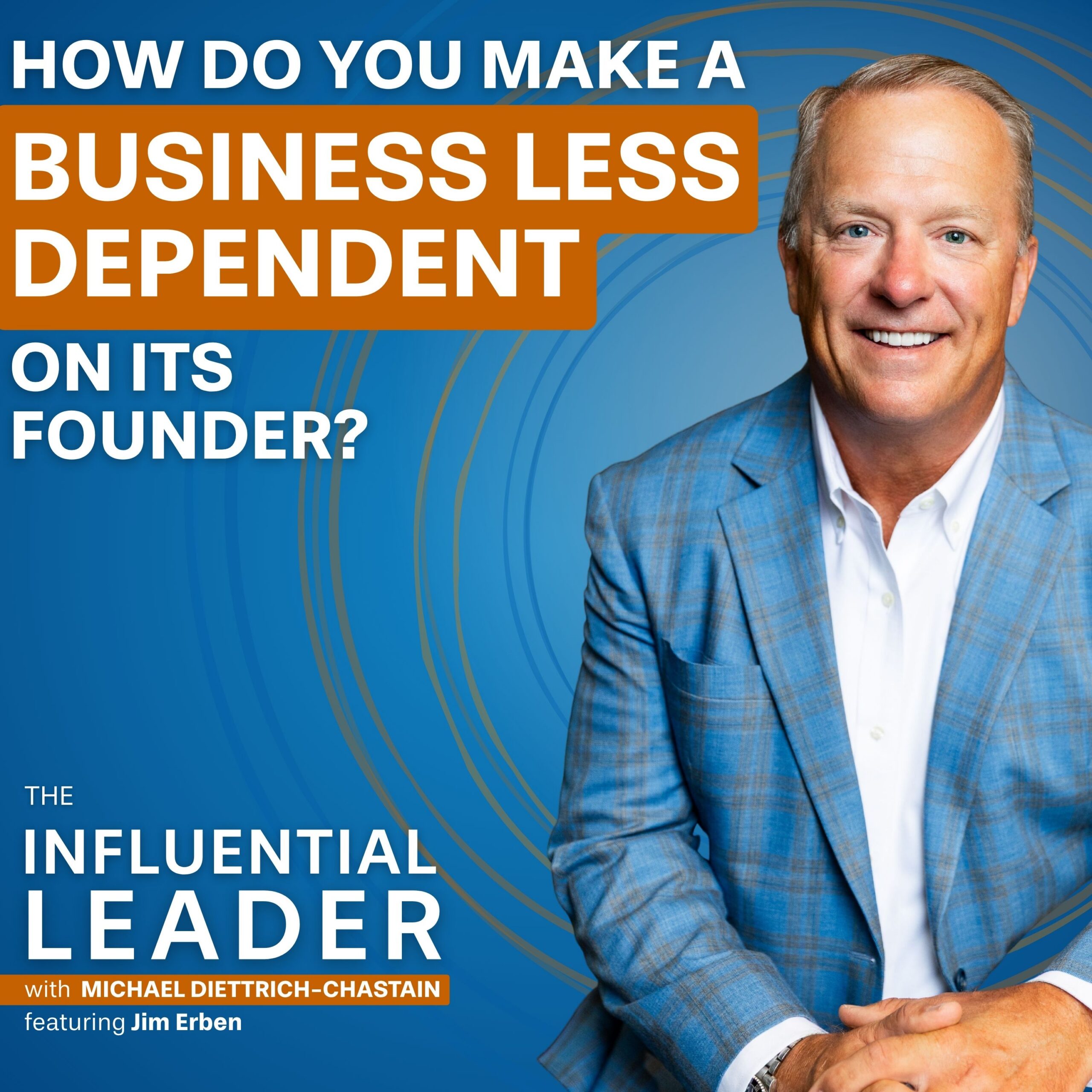
What happens to a business when its owner is ready to leave, or has to step away unexpectedly? Succession planning advisor Jim Erben joins Michael Diettrich-Chastain to make the case for preparing long before a sale or retirement is imminent. Jim explains why owners need to define their goals, understand the value of the company alongside their personal needs, reduce dependence on themselves, and tell senior leaders what the future could look like. They also discuss passing values to the next generation, finding a purpose after an exit, hiring people who care and can learn, and answering employees’ questions about change and AI.
Chapters:
- 00:00:00 Meet Jim Erben and why succession begins with trust
- 00:06:00 Why owners should plan before a sale offer arrives
- 00:12:00 Define the owner’s goals and communicate the plan
- 00:18:00 Succession by Design and the coming wave of exits
- 00:24:00 Owner dependence, business value, and potential buyers
- 00:29:00 Passing wealth, values, and expectations to family
- 00:35:00 What will give you purpose after the business?
- 00:41:00 Hire for trust, curiosity, and care
- 00:45:00 Build culture and prepare family successors to lead
- 00:49:00 Answer employees’ questions about AI and the future
Quotable Moments
- “I don’t care how big your net worth is or how big your business is. The asset of yours that we value the most is your trust, and that is sacred to us.”
- “Lack of proactive communication leads to speculation, and I’ve never seen it be good.”
- “Be proactive about your communication, about the values and expectations of whatever legacy you’re gonna leave behind.”
- “I don’t care how smart you are, if you don’t care, I really don’t.”
- “Everybody’s working to create your future, the business owner. What is their future?”
About the Guest
Jim Erben is a nationally recognized exit and succession planning expert, keynote speaker, and Founder of Erben Associates, a family wealth advisory office dedicated to privately held business owners, corporate executives, and high-net-worth individuals. With more than 30 years of experience advising entrepreneurs, Jim has helped guide over 30 successful multi–seven-figure founder exits while overseeing more than $350 million in assets under management and $2 billion in life insurance planning strategies.
Under Jim’s leadership, Erben Associates has been recognized multiple years on the Inc. 5000 list as one of the fastest-growing private companies in America and is widely regarded as the #1 exit and succession planning firm in Texas.
Jim is a perennial Top of the Table, Court of the Table, and Qualifying Life Member of the Million Dollar Round Table (MDRT), placing him among the most accomplished wealth advisors in the country. He is also one of only 500 senior American business leaders selected to represent the private sector in Business Executives for National Security (BENS), an invitation-only think tank focused on strengthening national security through private-sector expertise.
As an international keynote speaker, Jim shares practical insights on succession planning, exit strategy, business continuity, and legacy leadership, equipping business owners with the tools to protect and transition the value they’ve spent a lifetime building.
Links and Resources:
- Erben Associates Website
- Succession by Design Book by Jim Erben
- Succession by Design Framework
- Good to Great by Jim Collins
- King Richard Movie
- Forrest Gump Movie
- Arc Integrated Website
- Strategy Call Page
- Podcast Page
- Michael Diettrich-Chastain in Linkedin
- Michael Diettrich-Chastain in Instagram
- Michael Diettrich-Chastain in Facebook
- Arc Integrated in Linkedin
Transcript
Click here to show transcript
[00:00:00] When people ask me, “When should I start this?” Uh, yesterday
Michael: Today on the Influential Leader podcast, I sit down with my good friend Jim Urban, who is a succession planning expert. Jim’s been doing this for decades, and succession planning is a question we get from our clients regularly. Whether you’re a founder, leader of an organization as the primary decision-maker, or you’re in the C-suite and your decisions are in collaboration with others, or maybe you’re in the top few layers of leadership, succession planning is a common topic.
Michael: And so Jim covers a lot of ground in this conversation. Um, he talks about how to do succession by design, which is the title of his upcoming book. We talk about the silver tsunami and how that’s gonna not only impact the economy, but, leadership roles as well in the coming years. There’s some really interesting statistics that he brings to that part of the conversation.
Michael: We cover grounds around hiring. Jim shares three pillars to make the right hire, [00:01:00] another super common question we get from clients. And then lastly, why 70% of businesses don’t make it past the second generation, and what you can do if you’re a leader to not be one of those statistics. Hope that sounds interesting.
Michael: Stick with us. Let’s get into it. Welcome back to the Influential Leader podcast. I am your host, Michael Dietrich-Chastain, and with us today is Jim Urban, who has an important message for us, which is this: Every business owner will eventually face a transition. The question is whether that transition is planned with intention or left to chance.
Michael: Whether you’re thinking about retirement, a future sale, a leadership succession, or simply protecting what you’ve built, the decisions you make today will have lasting impact on your family, your employees, and your financial future. With more than 30 years of experience helping business owners navigate these complex decisions, Jim Urban is gonna share some key insights on building a successful exit and succession strategy.
Michael: We’ll discuss how to increase business [00:02:00] value, prepare for future transitions, avoid common mistakes, and create a plan that aligns with your goals for wealth, legacy, and the future of your company. Jim, it’s great to have you here, and welcome.
Jim: Thank you, Michael. Appreciate- Yeah … the opportunity to visit with you.
Michael: Absolutely. I always enjoy it. We’ve known each other for a few years now. Yep. We sure have. And, before we jump into succession and, and strategy, would love, uh, for our listeners just to get to know you a little bit more. And so before we started recording, we were talking a little bit about travel, which I know is y- a passion of yours.
Michael: the first question I wanna ask is what would be two or three things that are important to know about you as a human being that would give us a better sense of who you are? What comes to mind?
Jim: I care about people, I care about the people we serve, I care about the people that work with me.
Michael: And I wanna be known for not anything– I’m not any threat to cure the common cold or put somebody on Jupiter. But I do want people to remember [00:03:00] me for making them feel good about themselves- Hmm … if they’re worthy of it. good people need to be recognized as being good people, leaders and everything else.
Jim: and that’s probably what I pride myself on. I’m kind of a mini version of my father, who passed away about 18 years ago. And-
Jim: I try not to know any strangers. I like meeting people. I love– Like I met you. Mm-hmm. We made a connection from, to Asheville, North Carolina, which is one of my favorite places.
Jim: And so that’s a little bit about me.
Michael: Yeah. Awesome, man. Well, excited to have you come visit at some point down the road here. And, we talked a little bit offline about the importance of legacy, which it sounds like you’re hinting on as, as maybe a, a core value of yours. and I wanna dive into that, but maybe before we do, there was– there’s some feedback we got, and one of the elements of this show is, in your intake form, you, you put in a handful of people that know you well, and we ask them some questions about you as a way to get to know you a little bit [00:04:00] and prepare for questions that are gonna be interesting.
Michael: And all the people that we heard from about you said m- more or less the same thing around how, trusting you are as a core quality, that that’s a, that’s something that people respect about you and appreciate about you. And so it makes me wonder, how have you helped build that in others? Knowing that that’s a core strength of yours, how have you helped build the capacity for others to lead with trust?
Jim: ‘Cause one of our core values-
Michael: …
Jim: is trustworthiness.
Michael: Okay.
Jim: And we– and not to sound salesy, but we obviously are very flattered that people say that about us.
Michael: Yeah.
Jim: It lets us know that we’re hitting the mark. But we always tell our clients, “I don’t care how big your net worth is or how big your business is, the asset of yours that we value the most is your trust, and that is sacred to us.”
Jim: And so that, it pleases me to hear that. I’m a little humbled by [00:05:00] it, but it’s, it lets me know that it’s working.
Michael: Yeah, I think it is. everyone that we heard from really emphasized how much that they appreciate that about you. And, and it, is maybe a segue to this, this question of, of sen- of succession.
Michael: And w- when you think about succession planning, if you were to think about it as a trust problem, not a financial one, what comes to mind for you when I say that, that succession might be a trust problem, not a succ- not a financial one?
Jim: That’s interesting. I would say, and, and I use the twin person analogy
Michael: Tell us about that.
Michael: Yeah.
Jim: So if you own a business And you have a twin brother or sister that has identical makeup, family, resources, business, everything’s the same.
Michael: Mm.
Jim: And your twin just keeps doing what you’re doing, and I call it the Forrest Gump and Lieutenant Dan approach. We’ll just run [00:06:00] Bubba Gump Shrimp Company and, just ha- let’s learn, do all the things we do-
Michael: not knowing there’s a hurricane coming.
Michael: Right.
Jim: And you, Michael, came up in your world with a well-thought-out plan of how you wanted to someday exit the business in style, whether it’s internal to family members or key execs or eventually to a third party, with a personal wealth alignment that if you have a continuity event like a premature death or incapacitation, you don’t destroy the family or the business or the key executives.
Jim: Who’s more likely to accomplish their objectives? and that was the basis of the, of the book we wrote and the roadmap that we do, and- … when people ask me, “When should I start this?” It, yesterday.
Michael: Yeah.
Jim: Do you not think it would be using the twin person analogy, do you not think it would be more advantageous for you to start now-
Michael: Mm
Jim: versus waiting until you get an LOI not even knowing if it’s enough?
Michael: Right.
Jim: you can do no pre-planning to minimize taxes. [00:07:00]
Michael: Yeah.
Jim: So that’s kind, where that really resonates with me.
Jim: Because, I mean, we’ve worked with people 15 years out.
Michael: Mm-hmm.
Jim: The longer we’ve worked with people, the more effective-
Michael: it has been for them, and they have embraced the process so that there’s no doubt in their mind. I mean, there’s a quote that I heard and I, and I really believe in, and that’s whether it’s retirement or exit planning, whether it’s, if you’re a leader in a company, the reason why people face the future with apprehension instead of anticipation is ’cause they don’t have it well designed.
Jim: And it’s so true. I mean, they don’t– “I don’t know how I’m gonna exit. I’m, I’m just gonna figure it out.” Well, that’s the Lieutenant Dan and Forrest Gump approach.
Michael: Yeah.
Jim: And with what’s coming, and I know we’re gonna talk about it at some point, but this silver tsunami that’s heading towards all of our way in the business world over the next eight years-
Jim: who’s gonna be better equipped? [00:08:00] You, who I just outlined as a person that came up with a plan to handle the tsunami-
Michael: Right …
Jim: or your twin brother or sister who’s just doing the Forrest Gump, Lieutenant Dan approach?
Michael: Absolutely. Ab- yeah, it makes perfect sense. And yeah, I definitely wanna talk about the silver tsunami.
Michael: yeah, I appreciate the notion of planning way, way ahead before we need to. tell us a little bit just for context, what, what is the, the typical kind of business or range of size of businesses that you guys serve? what and what does that work look like? How do you help them?
Jim: We work with business owners now probably 40 million to up to close to a billion dollars in revenue.
Jim: Obviously our sweet spot’s probably 40 to 250.
Michael: Okay.
Jim: We’ve worked with several that started out under 100 and they’re now several billion, but that’s not the norm. Got it. I wish it were the norm. Yeah. But [00:09:00] that’s not. But- Mm … succession and exit planning is fluid. Yeah. This isn’t something like you’re getting a will done and here you go, and let’s look at it in three to five years.
Michael: Mm.
Jim: If you’re gonna do this successfully, you’ve gotta know what the value of your, your… the market value of your business is every year. Mm-hmm. Your personal wealth needs to be aligned with your business value so that someday, whoever you’re working with, if it’s us, I can call you and say, “Hey Michael, you and your wife are such that your personal wealth that you’ve put aside and the value of your business are such that you can exit in style with minimal risk of ever running out of money.”
Jim: So you’re playing with the dealer’s money.
Michael: Right. Yeah,
Jim: that’s- If you didn’t do that and you call me instead and say you’re your twin brother, and your twin brother calls me and says, “Hey, I got an offer.”
Jim: Okay. Is it enough?
Michael: Right.
Jim: I don’t know.
Michael: Yeah. No, that makes sense. And so we… as you describe that, it sounds like you [00:10:00] are in partnership with your clients for perhaps many, many years as they’re going on this journey and you’re, you’re supporting them.
Michael: Is that, is that accurate? Right. Yeah.
Jim: We, we wanna, we wanna help you be more successful.
Jim: We’re not… Well, we don’t go into the areas that you do, where it is leadership enhancement. We recognize where we have some, some issues where maybe we have clients that are owner-centric, where the business is predominantly the owner or owners.
Jim: And, we need to come up with an ownership skill transition plan and a way to make that business less owner-centric. Mm-hmm. It will add more value and minimize the risk of the business.
Michael: Yeah.
Jim: And I’ve had so many business owners tell me that they’re very glad that we’re not owner-centric anymore, ’cause, 10 or 12 years ago we were.
Michael: Mm-hmm.
Jim: And that was outlined by some of our [00:11:00] clients as a concern. So nowadays I’ve had to insert myself into some of these meetings just to make sure I stay relevant.
Michael: Yeah. That’s great.
Jim: the, the… For those of you that are, are not an owner, but you’re a C-suite executive, like those that you work with, Michael, getting in and learning about what the ultimate plan is for the owner.
Jim: And being proactive as an owner and outlying it and bringing your C-suite team on board.
Michael: Yeah.
Jim: I mean, versus, “Oh, I don’t want them to know,” It’s like being in a submarine and not telling your C-suite officers, “This is what we’re doing.” Just- Totally … keep them in the dark. You know what I mean?
Jim: Yeah. We wouldn’t go very far. Well, and
Michael: we do a lot of strategy work with senior leaders- Yeah … and that, that goal, that thread you just touched on is a golden thread that we see as well, which is if you have a strategy, not only have to, share it really transparency with, with [00:12:00] your senior leaders, but you also have to cascade it so that everybody is understanding, what’s the direction we’re moving in, what is the expectation, what’s the future vision?
Michael: So that makes a lot of sense to me. I’m gonna put on a, a hat for a second, Jim, ’cause I’m thinking about clients we have that are founder-led owners of businesses, and they’re part of the C-suite, but they’re, maybe 100% owner. And say they’re 10 years out of either wanting to sell or retire or move on, and they haven’t yet started planning for this in a significant way.
Michael: What’s a, what’s, like, the first step that they might consider or the first question they should be asking? If they’ve got a 10-year runway, what, what would you suggest?
Jim: Somebody has to be able to articulate and crystallize the business owner’s objectives.
Jim: And many times we have to be talking to them about how do you feel about [00:13:00] are you wanting to transition to a third party?
Jim: So is, is a va- is the value of the transaction more important to you than to whom you s- transition the business to? There’s no right or wrong answer.
Jim: But that’s an e- that’s an example of it.
Michael: An
Jim: example. if you and your spouse get hit by the proverbial bus, or when the bus does eventually hit you, as it hits all of us-
Michael: Right
Jim: what is your legacy plan? How’s that being communicated?
Michael: Mm-hmm.
Jim: Proactive communication, lack of proactive communication, let me say that, leads to speculation, and I’ve never seen it be good.
Michael: Yeah.
Jim: I’ve never seen the outcome of speculation be good.
Michael: Yeah. Yeah. Y- s- again, same here, like different contexts when we think about team functionality, how do teams get the most productivity and performance out of their- Right
Michael: out of the group, out of each other, that, that proactive communication is also a golden thread in our line of work. Very much [00:14:00] so. And I, I wanna talk about your, your Succession by Design framework before we go back to the, the silver tsunami, ’cause I think it sounds like there’s some threads between this proactive approach and likely your framework.
Michael: Can you tell us a little bit about it?
Jim: Sure. Let’s go back to the twin person analogy.
Michael: Okay. Sounds good. Yeah, yeah.
Jim: You have the… I- if you do, as I outlined a few minutes ago, what I suggested or we suggested-
Michael: Yep …
Jim: have a well-orchestrated exit or succession plan, and your twin brother just does the Forrest Gump approach.
Michael: Mm-hmm.
Jim: That’s by default, yours is by design. Who do you think- Hmm … is more likely to accomplish their objectives easier?
Michael: Design, right?
Jim: And that’s- Mm … that’s why we came up with that. That’s actually the title of the book, “Succession by Design.”
Michael: Oh, excellent. Okay, great. Great. And what, and t- what is…
Michael: I- is there any detail of the framework? I, not to spoil it, spoil the book, but any piece of it that you wanna share? [00:15:00]
Jim: The why is what I wanna share.
Michael: Yeah. Okay. Yeah, go ahead.
Jim: I didn’t set out to be an author.
Jim: I love what I do, and I was very frustrated with the lack of people that are in the space of helping business owners in this area.
Jim: And now everybody’s panic-stricken and every plumber and, you name it, is trying to get into this space.
Michael: Mm-hmm.
Jim: And those that are very good are really effective, and those that aren’t are not. And so- Sure … I wanted to write a book that can take an advisor or a business owner or a key executive and walk them through a roadmap of how to do an exit or succession plan.
Jim: It’ll be more difficult on a do it yourself, but at least you’ll know what you [00:16:00] need to do. And it’s been tried and true. We’ve been, we really focused on exit and succession planning 22 years ago next month.
Michael: Wow. Okay.
Jim: When we had a, a business owner call us from North Texas. It was a trucking company.
Jim: And I remember him, we, we did a lot of planning for him in 2004, and we were meeting in December. And we had accountants, lawyers, and, a variety of people in there. And he said, “Do you mind stepping out with me? I’d like to talk to you.” I was like, “Sure.” So he goes, “I don’t know what really we’re doing.
Jim: I presume you know what everybody in there is doing, but I want to articulate what it is I want you to do for me and my family.”
Michael: Hmm. “
Jim: Okay.” He said, “I want you to pack my parachute Take me up in an airplane high enough where you can gently nudge me out- … and I can land in a nice green meadow. Green, I guess, was money.[00:17:00]
Michael: Yeah.
Jim: And in the event my parachute doesn’t open up, you better make dang sure my backup parachute does or I’m gonna haunt you.
Michael: Yeah. ‘
Jim: Cause it will destroy my family, it’ll destroy the business I’ve worked so hard for, and it will harm the key employees.
Michael: Sure. Sure.
Jim: And that, that just hit me-
Michael: Hmm …
Jim: because I was like, that’s kind of what we’re doing is helping people pack their parachutes and then help them deploy.
Michael: Yeah. Love it.
Jim: Unfortunately, these, this couple passed away of cancer-
Michael: …
Jim: but the planning that we, within two years, and the planning that we did was so successful that it really just let me know, you know what? This is really what I wanna do to help people.
Michael: Yeah. Love it. What a, what an awesome impact story.
Jim: Yeah.
Michael: Yeah. That’s great. That’s great. And is the book the way that it’s framed, is it specifically for those that are just beginning to think about this, or is it written for those that have already given it some [00:18:00] thought and they’re a few years into planning, but they need better guidance?
Michael: Like, who would be the best reader for it? Or maybe it’s both.
Jim: It’s both. Okay. I mean, I will tell you, if you’re starting a business, effective October 1st-
Jim: I could argue that it would be worth a read.
Michael: Okay. even then. Okay …
Jim: yeah, I mean, but that’s really not the target audience, but-
Jim: build it with the end in mind.
Michael: Sure. Yeah.
Jim: And, but really and truly, it’s people that are two to 15 or 20 years away from some sort of a planned event, whether it’s- Mm-hmm … transitioning it to your two daughters-
Michael: Yeah …
Jim: or whether it is to a third party so you and your wife can, go travel the world.
Michael: Yeah.
Jim: And you don’t have to know the answer to that particular question right now. You’ve got two young children that we discussed- Mm-hmm … before. Yeah. And so you don’t know if, they’re gonna be on Mars by the, in 20-
Michael: Yeah, right. …
Jim: 20 years. I mean-
Michael: Yeah, who
Jim: knows, right? … you don’t know, but at least you- Yeah
Jim: you [00:19:00] have the opportunity to.
Michael: I love it. I love it. Yeah. I really appreciate the, the forward thinking and the deep planning approach, and so I’m excited for folks to check this book out. I think it’s an awesome resource. I’m excited to be able to give it out to some of our clients, ’cause I can think of folks, right away that would benefit from it.
Michael: Thanks. yeah, of course. Shi- shifting gears a little bit, it’s not an unknown thing that the silver tsunami is upon us. We’ve got another, 10, 10 years of folks moving out of the, out of the workforce or so, right? And so I would imagine what that means for you and your firm, Jim, is that y’all are very busy right now and probably will be very busy in the next 10 years.
Michael: what are some thoughts you have or anything you wanna share about the silver tsunami and, and the changes that we’re all gonna face ahead in the next many years?
Jim: Starting in 2023, it was estimated that $14 trillion are going to be changing hands involving 12 million business [00:20:00] owners between now- Wow
Jim: and 2033.
Michael: Wow.
Jim: I don’t think you can set your clock to that, but I think that’s a pretty good timeframe.
Jim: If you think about $14 trillion, our annualized GDP That’s $32 trillion.
Jim: So where’s this money gonna come from to handle everybody?
Jim: And the probable answer is it’s gonna, the fortune’s gonna go to those who prepare-
Michael: Sure.
Michael: Yeah …
Jim: versus those that don’t. But that doesn’t mean that, there won’t be a Forrest Gump and Lieutenant Dan situation coming.
Michael: Sure.
Jim: But by and large, I would wanna make sure that, there, there’s a couple of things in play. Obviously, un- unless you and I have been asleep of late- Mm-hmm … we know the ar- impact of artificial intelligence, AI.
Michael: Right.
Jim: What is the impact that it’s going to have? [00:21:00] There are going to be some jobs lost, in my opinion. There are going to be sub jo- some jobs gained, in my opinion.
Michael: Sure.
Jim: I don’t think that AI or a robot is going to take over the conversations that we have about a 60 or 70-year-old, 50, 60, or 70-year-old business owner that has put their blood, sweat, and tears- Mm-hmm
Jim: into the business. You can feel it in the walls. You can feel it in the, in the culture.
Jim: I still believe that we’re gonna be doing really well as an economy. However, the last of the baby boomers are turning 70 And the peak of them, the last of the peak of them, like in tw- in three, four years.
Michael: And that’s, I’m told, the same time that the China one-child policy is impacted at the same time because I guess they did that, I don’t know, 50 years ago, what have you. Mm-hmm. I [00:22:00] don’t remember when that happened. But the economies are based on consumer spending, period, end of subject.
Jim: Always have been, I believe always will.
Jim: Yes, the infrastructure and all of the, you know, thing, data centers and things going on and all of the stuff around the world to support AI, but they’re still going to be based on how many people are on an airplane, how many people are in a restaurant, how many people are at, a World Cup soccer event or what have you.
Michael: Sure.
Jim: And I just go back and will tell you, I would rather be on the side to have it planned out where I’m protected-
Michael: …
Jim: than, crawling up in the crow’s nest like Lieutenant Dan did and- … was having his issues with God. Yeah.
Michael: Right. “
Jim: Bring it,” if you remember. “Bring it! Is this all you have?”
Jim: That’s not the approach I wanna take moving forward.
Michael: Yeah. Well, y- I’m guessing that there may be some leaders listening to this that, that don’t have a [00:23:00] plan, and maybe assume that… I’m gonna ask you, I don’t know if you can speak to this, but I’m gonna ask you a question ’cause this has come up just in, in my network.
Michael: Maybe they’re under the assumption that, they, they don’t think that their business could be bought, or it’s too small to be bought, or they don’t think they can be replaced, or, fill in the blank. So I’m… A- and I’m particularly thinking about businesses that are maybe a little smaller than the ones you work with, so think, 5 million or less.
Michael: I’ve heard this sentiment before, so, I’m, I’m wondering, like, what are… what comes to mind when you hear things like that, particularly for that smaller business owner?
Jim: I’m a big believer in mindset.
Michael: Okay.
Jim: If you believe that, it will come true.
Michael: Yeah, yeah. Okay. Okay.
Jim: Be careful what you believe- Yep
Jim: ’cause it’s likely to come true.
Michael: Yep.
Jim: I have never… Well, let me be clear. If you’re in the VCR repair business still- … there may not be much of a future for you. May not be an idea. Yeah. You may wanna [00:24:00] rethink that strategy.
Michael: Sure. Sure.
Jim: Or if you’re in the dial-up internet phase, but- just have a plan to grow your business.
Michael: Mm-hmm.
Jim: And, this, this country was founded on people that took risks.
Jim: we’ve got clients that are big into commercial real estate that, that are young, in their 30s.
Jim: We’ve got clients that, have started a plumbing business and now it is a, a Goliath.
Michael: Sure.
Jim: Auto part remanufact…
Jim: There, there’s just so many neat ways-
Michael: Mm-hmm …
Jim: that people think of how to make money-
Michael: Yep …
Jim: and supply something that somebody will buy.
Michael: Mm-hmm.
Jim: And I, I just don’t subscribe to the theory that, you know- First of all, nobody can do my business.
Jim: I’m not certain that, anybody that I’ve met I can say is the absolute smartest person in the world.
Jim: Yep. ‘Cause that would be the o- maybe Albert [00:25:00] Einstein, nobody could have replaced him. But outside of that-
Michael: Yep …
Jim: if you will get out of that mindset and make your business less owner-centric, and look at ways to, whether it’s the “Good to Great” book by Jim Collins or what have you, or, Wayne Gretzky’s famous comment: “Go skate where the puck is going, not where it is.”
Michael: Yeah, yeah. ‘
Jim: Cause that’s what made him… And there’s so many tapes and, and videos on, on Wayne Gretzky skiing away from everybody ’cause everybody else is going to… Or soccer, same thing.
Michael: Sure.
Jim: I was watching Messi. Messi walks, I saw a statistic that he walks, like, 60% of the time- Interesting … ’cause he’s analyzing where everyone is, and he’s seeing where- Yeah
Jim: the ball can go or should go.
Michael: Yeah,
Jim: yeah. And that’s where he would go. Huh. Everybody else is chasing the ball.
Michael: That’s great. I love that analogy. Yeah.
Jim: So that, that would be my response to that.
Michael: That’s great. That’s great. and to, to turn this kind of on the other [00:26:00] side to, to the folks that maybe have opportunity from a buying standpoint, what comes to mind is all these businesses are selling.
Michael: There’s m- there’s probably, guessing, I don’t know if you can speak to the statistic, but maybe more sellers than there are potential buyers. And so that seems to me that with this 14 trillion, that there’s a huge wave of opportunity for small, medium business owners that maybe wanna capitalize on purchasing some of these, folks that are moving into succession.
Michael: Do you have any thoughts there?
Jim: We created an investment banking or mergers and acquisition firm almost three years ago.
Michael: Yeah.
Jim: Because we were very disenchanted at the process that we were handing our clients to in that world.
Michael: Mm-hmm.
Jim: And they were just getting beat up like the world’s worst colonoscopy.
Jim: I mean, they’re coming back- Hmm … out of a due diligence process just beaten to death.
Michael: Yeah.
Jim: Yeah. And, and so I tell you that ’cause we have a lot of insight in it, and we’ve [00:27:00] got a phenomenal guy running it, Michael Lambrix. And I… The answer to the question of buyers versus sellers, I don’t know, it’s gonna depend on the industry if there are more buyers-
Michael: than sellers or more sellers than buyers.
Michael: Sure.
Jim: What I do think is going to happen is the, the multiples might get skinnier towards the edge of this silver tsunami.
Michael: Oh, interesting. Why is that?
Jim: Because there’s only so much money out there.
Jim: And eventually some of the larger conglomerates, the the larger private equity firms-
Michael: Sure
Jim: are gonna start hunting for deals.
Michael: Mm-hmm.
Jim: Right now they’re hunting for growth, but they’re gonna eventually start hunting for deals.
Michael: Yeah.
Jim: and I just believe that if you’re planning on running the business another [00:28:00] 15 years, that’s great. Hunker down and weather the storm that’s coming.
Michael: Mm-hmm.
Jim: Lock your key execs down and continue to evolve and, and skate where the puck’s going, if you will.
Michael: Yeah.
Jim: But in the meantime, I just think that you, A, need to know the number that you need-
Michael: Yeah …
Jim: to live happily ever after with little to no chance of ever running out of money.
Jim: And then once you kn- you know, that’s your new goal. if your goal is that, or if it’s to be worth $100 million, that there’s no right answer to what that goal is.
Jim: Do you want enough to live happily ever after and take care of generations? Or is your goal to be worth 100, 250 million? What is your goal? It doesn’t- Right … there’s no wrong answer, except “I don’t know.” And that’s not a wrong answer. That’s just an answer that needs help getting clarification and crystallization.
Michael: Yeah. Yeah. Makes sense. [00:29:00] Makes sense.
Speaker 2: You ever wondered what your leadership style really says about you? Are you leading in a way that drives engagement, builds trust, and maximizes your influence? Well, we’ve got a resource for you. You can take our Leadership Influence Quiz, which is a quick three-minute assessment that gives you a personalized insight and roadmap and actionable strategies to improve your leadership effectiveness and ability to actually change behavior.
Speaker 2: The best part is that you’re gonna get immediate feedback with recommendations you can use right away to elevate your leadership game. Just go to leadershipinfluencepodcast.com to get your free report today
Michael: Well, we talked a bit earlier about legacy and you’re, you’re getting into that territory right now. certainly sounds like legacy is a value that you hold strongly. tell us about that. why is legacy important to you?
Jim: in case everyone on this podcast is listening to it, including you and I have been [00:30:00] sleeping.
Michael: Yeah. Yeah.
Jim: The largest transfer of wealth in world history is occurring.
Jim: And all of a sudden we are turn– there’s three heirs, only three heirs that you can have in an estate.
Jim: charity or kids c- or heirs, your heirs. Could be cousins, whatever, but whomever it is- Okay … your named heirs, charity or the government.
Michael: Mm.
Jim: Who do you wanna get what?
Jim: And what I find people like, do you not think that your kids know how successful you are? And I know you don’t wanna talk to your 25-year-old about money. Mm-hmm. They have a pretty good idea when they’re in grade school and you’re backing out in a Land Rover- …
Michael: or
Jim: a Mercedes S Class, that they’re not gonna be getting coupons for lunch.
Jim: And so then all of a sudden you don’t wanna talk to them about what the expectations are about, the, [00:31:00] the future, how we expect you to manage the wealth, how your dad and I or your mom and I created this and what our expectations are of you. Instead, you’re just gonna dump this on them and tell them to figure it out?
Jim: And it’s, it’s estimated that absent an entrusted plan, I’ve heard statistics as much as 70% of it blow it in the second generation- Wow. … because they don’t know the expectations, they don’t know what the values are. And I see this all the time. and now there’s some states that almost three years ago in 2023 that have changed the laws of perpetuity.
Jim: And that in a trust, it used to be most of the states were 21 years after the last child and being. So your parents, it would be the last of your kids alive, and 21 [00:32:00] years after that would be when the estate would distribute.
Michael: Mm-hmm.
Jim: Now there are states that have changed the laws of perpetuity s- so that you don’t have a tax 21, every generation.
Jim: And so in Texas it’s 300 years, in Florida it’s 1,000 years.
Michael: Wow.
Jim: some states didn’t change it. But if you think about the impact of a million dollars that is taxed nine times over 300 years versus not taxed nine times over 300 years-
Michael: …
Jim: it is billions in taxes that are being wasted, billions on just one million.
Jim: That’s crazy. So if you’re worth $3 million, do the math on that.
Michael: Yeah, that’s
Jim: nuts. And I, I’m, I just am f- I’ve become frustrated at the lack of preparation that is happening to the next gen.
Michael: Mm.
Jim: your daughters [00:33:00] are going to, if properly structured and communicated, they’re gonna, they’re gonna be setting…
Jim: And it’s kind of like the best analogy I can give about legacy planning is the Olympic torch.
Michael: Okay.
Jim: So imagine if you don’t plan, if we don’t plan the Olympic torch, I get it, I’m running with it. Mm-hmm. I stop and have a beer. I lay the torch down. Hopefully it doesn’t go out. I’m drinking a beer.
Jim: I don’t know where I’m going, but hopefully you and I are gonna meet up because I’m supposed to pass the torch to you.
Jim: I pass the torch to you. you go home and relax, or you go play golf, set the torch down. That’s not how the torch works. And the torch is legacy to legacy.
Michael: Mm-hmm.
Jim: Generation to generation. And the Olympic torch is done with a plan. “Michael, you’re gonna have it for a mile in, the third leg. Jim, you’re gonna have it for 100 yards on the fifth leg, ’cause that’s about all we [00:34:00] think you can run.” But whatever it is, there’s a plan to ultimately get to the cauldron and light the flame for the Olympics.
Jim: Same thing with legacy.
Michael: Yeah.
Jim: and I, I just implore anyone listening to this, be proactive about your communication, about the values and expectations of whatever legacy you’re gonna leave behind.
Michael: Yeah. Yeah.
Jim: And it’s, it’s not money. I wanna, I wanna- Yeah … interject one more thing. It’s not just money.
Jim: Best analogy I can give you, if you haven’t read the book or seen the movie King Richard.
Jim: King Richard has… He and his wife created two very wealthy people, Venus and Serena Williams.
Michael: Oh, right. Yeah.
Jim: He didn’t teach them about growing wealth. He taught them about perseverance, about mindset, about fight for what you want and never giving up.[00:35:00]
Jim: He got beat up in the process of protecting their right-
Michael: Mm-hmm …
Jim: to play tennis in Compton.
Michael: Yeah.
Jim: and it’s a phenomenal movie. Mm-hmm. That’s a legacy.
Michael: Yeah.
Jim: Love it. lottery winners almost always run out of money because they have no expectations.
Michael: Yeah. Yeah, I really, I appreciate the drive for planning and purpose and, and impact and, this pro- this proactive approach.
Michael: And,shifting gears a little bit, I wanna move over to a couple of leadership questions, but it’s connected to what we’re talking about in a way. as a preface to this next question, I, again, one of the things we do on this podcast is we send out questions to those, that know you well and get some feedback from them.
Michael: And one of the questions we ask folks that you’ve identified we could reach out to is, “What’s a question that Jim helps others ask or answer?” That’s the question that we gave to them, and one of the que- one of the answers we got back was, “Jim helps people answer what’s the most important [00:36:00] outcome you’re trying to achieve.”
Michael: These folks identified that you’re an expert at that question. What’s the most important outcome you’re trying to achieve? And I like, I really like that as a, as a bit of a superpower. I’m using my own words, but, how do you, how have you been able to hone that, that gift of helping others identify the most important outcome they’re trying to achieve?
Michael: How is it that you’ve gotten good at that?
Jim: Wow. my only superpower is, uncorking a bottle of wine. But, I would say that’s a really good question. To me, it is starting with the business owner or key executive, whoever it is you’re working with, and asking them the, the soft but important questions. Mm-hmm. “What do you and your wife want to accomplish, Michael?
Jim: what is your goal with your business or her business or whatever it is? What’s the goal?”
Michael: Mm-hmm. “
Jim: I [00:37:00] just wanna make a lot of money.” “Okay. Well, I mean, everybody says that, but what does that mean? What does that… Define that for me. You don’t have to define the number, but is this a legacy asset, a passion asset, or a monetary asset?”
Jim: And, I’ll have conversations with people that- Especially men, this is the, I’m told, the third largest negative impact to a man’s life expectancy is when they sell their business or retire from their company. They go from working their rear end off using their brain-
Michael: …
Jim: to retiring and they’re running, 50 miles a day, whatever, playing golf five days a week.
Jim: Whatever it is that you’re doing- … you’re not using your mind.
Michael: Right.
Jim: And what happens is you’ve gone for, 30, 40, 50 years using your mind and even a little bit of stress, not too much stress hopefully, but enough stress to keep your [00:38:00] cortisol going.
Jim: And then all of a sudden you stop.
Jim: And, and, and I have a great analogy with one of my, one of the men, if I created a R- a Mount Rushmore, which is a question I ask- Mm … who would be on your r- on your professional Mount Rushmore?
Michael: Oh, that’s a great question. Right. I love
Jim: that. One, one of mine was a very senior executive with a large life insurance company.
Jim: He retired in North Texas after 35 years. He’s one of my best friends. He never ever had to move. I don’t know how he pulled it off, but he never had to move. So when he retired, he woke up in the morning, I remember him calling me saying, “Oh, you’re not gonna believe this. I got out of my shower. I had a cup of coffee next to my sink as I was shaving.
Jim: I go in, my wife’s made me, bacon, eggs, toast, and had the ‘Dallas Morning News’ laid out for me.” And [00:39:00] I told her, I said, “This is fantastic. I wish I’d have, I should’ve retired 10 years ago.” And she goes, “You need any more coffee?” “No.” Or, “Yeah.” And she goes, “Okay. You, it… Anything else? Any more toast?” “No, I’m fine.”
Jim: He was patting his mouth, and he was bald-headed, which is important for the next part. So she wadded up the paper and smacked him on the head and said, “Wake up.” Oh. “You see this? This has been my office for 35 years.” She was a stay-at-home mom. “I didn’t retire. So tomorrow you’re gonna get up and get out of my office at 8:00.”
Michael: Right. “
Jim: Or I’m gonna swat you again with the newspaper.” And he did it, but not really. Yeah. And, I mean, he, he created an office and he did some consulting and he r- he, he did that for many years. But then ultimately, he wasn’t working after probably five to [00:40:00] seven years at the pace that he had been, and it- Mm
Jim: catches up to us. Yeah. I can’t tell you, we’ve worked with executives of big companies And their, their physical demise, and we see it with business owners.
Michael: Mm-hmm.
Jim: So back to your original question to me, what another one of the questions I ask is, “Michael, what is– where are you transitioning to when you sell this business?”
Michael: “
Jim: And if you don’t have the answer to me sometime in the next year-
Michael: Mm-hmm …
Jim: I’m gonna bring your spouse in on this- … and let her know the ramifications of it.”
Michael: Yeah. Yeah.
Jim: And we had a gentleman that exited in 2020 that never would answer that question. I mean, we kicked that can- Mm … down the road for 10 years, and he, he passed away a year ago.
Michael: Yeah. I’m
Jim: sorry. [00:41:00] And it’s pr- and it does not impact women as much because they, throughout their life, they’ve, they’ve had kids, they’ve had multiple interests. They don’t get as- Mm-hmm … wrapped up in their business and the identity of owning- Yeah … a business as men do.
Michael: Right.
Jim: And so I really try to focus on that.
Jim: So that’s some of the area that they may be referring to.
Michael: I love it. I, I think it’s… I’ve seen it. I’ve seen this happen, the, the moving on from an intense career and not having another identity or purpose to lean into, and it’s, I think it’s one of the, it’s one of the most important, you know, parts of our human experience, and it makes sense that these statistics show that without it, we tend to get sick, we tend to pass early, tend to struggle.
Michael: And so I love that, I love that you’re an- they’re asking that question early, and I think for those listening, thinking about succession, whether it’s right around the corner or many years away, I, I love that question can be asked sooner than later.
Jim: Yep.
Michael: yeah. [00:42:00] Awesome. Well, one, one other leadership question before we begin to wrap, Jim, and again, this, this came from, someone that we asked some questions to, and you’re gonna, you’re gonna get all this feedback too.
Michael: That’s a gift we like to give our guests. So, so stay tuned. You’ll see all these answers. But, one person mentioned that they, that you took a chance on hiring him, and it changed his life, and he’s ver- And you’ll read this in the details. He’s very glowing about it. but my question for you, ’cause this comes up from so many clients that we serve, what do you look for in a potential hire that you’re gonna make that might not fit the mold, but you see something that is a reason to move forward?
Michael: What are you, what are you looking for?
Jim: Do I ever see this person having the ability to sit down with me- Mm … and my wife if I were a client?
Jim: And them caring enough about my family [00:43:00] and I that I would trust them.
Michael: Yeah.
Jim: And do they have the ability to learn and desire to learn?
Jim: I have a former English teacher, middle school English teacher.
Jim: I have a person that I met in Costa Rica who ironically was living about a mile from our office, and she was in college. She reached out to me looking for a job. I remembered meeting her. I’d followed her in her athletics at, in college.
Jim: And she’s phenomenal.
Jim: I have just a variety of people that, not to say we haven’t had some turnover, but-
Michael: Sure
Jim: we hire smart people that care.
Jim: That’s the bottom line. And I don’t care how smart you are, if you don’t care, [00:44:00] I really don’t. Yep. I, we need both.
Michael: A- absolutely. I love– those are s- I wrote three things down taking notes ’cause these are such good points. Like the trust came first, I think can you trust them?
Michael: their ability and desire to learn, and then do they care? I think those are wonderful qualities. again, I ask you that because this is a, question we get so much- Sure … about how do you hire outside of the mold? And so, w- we’re gonna begin to wrap, Jim. We’ve got a handful of questions that are, we like to ask at, at the end of every episode.
Michael: And so when you think about leadership influence, is there– you, you own a successful business, you’ve worked with a lot of successful leaders in your career. When you think about the best tip for leaders that want to improve their ability to influence the behavior of those that they’re leading, what comes to mind?
Jim: Be honest and be transparent
Michael: Love that. Okay
Jim: Create a culture[00:45:00]
Jim: That attracts the people that you wanna have as clients or customers- Mm-hmm … as well as employees.
Michael: Yeah. Very good.
Jim: And what I’ve learned in helping friends of mine or people, young kids that are, looking for jobs and helping them find careers is The ones that have great culture are always the ones that unless they’re growing, they don’t have a lot of turnover.
Michael: Mm-hmm.
Jim: And, people will, I mean, I’ll go, I’m a, I’m a George Patton disciple.
Jim: his culture was certainly unique. I’m not sure I would embrace it in the corporate world, but his soldiers would do anything for him. And I’m certainly not Patton, but I think that the people I work with would do anything for me.
Jim: And the most successful business [00:46:00] owners I’ve seen, their culture, I mean, you can feel the culture when you walk in the building.
Michael: Yeah. That’s
Jim: good. They trust the direction, they trust the leadership, they trust the ownership, that the owner actually cares.
Michael: Yeah.
Jim: And lastly, and Michael, this is, it really is something to me when you said, I look at my position as a support position.
Michael: Right.
Jim: I often say I, I should be sitting up in the re- receptionist area ’cause my job is to go out and help the people on our team. “What can I do to support you? What do you need? what do you need?”
Michael: That’s great.
Jim: As opposed, to the dictatorship, I mean-
Jim: I don’t embrace that approach.
Jim: and I really do think that’s some of the keys I’ve seen. and with an addition of one more point, the, the some of the keys I’ve seen are those owners that are now phenomenally successful. For the, for those that are thinking about an [00:47:00] internal transition to kids-
Michael: Hmm …
Jim: the most successful, the, the odds are against you.
Jim: 70% of businesses don’t make it through generation two. 88%- Mm-hmm … don’t make it through generation three. And a big shock to you, generation four or more is 97%. And we have them in all of those cases, including fifth generation. I’ve never seen it be successful when a child comes into a company at a different level than the rest of the employees.
Jim: They all of a sudden- Hmm … they’re 23 years old and get the corner suite.
Michael: Oh, yeah.
Jim: And a cell phone- That’s a big risk … and a car, and they, they didn’t do anything except their last name.
Jim: Every single successful generation two, three, and four, and five that I have seen, everybody started at the bottom
Michael: Yeah
Jim: And [00:48:00] it is amazing to me that, when I see that, “How’d you get started with Micro?”
Jim: “Oh my gosh, I was, I started sweeping the floor.” we’ve got- Uh-huh … a construction client, and the guy, the kid now owns 40% of it and he’s running the company. I said, “How’d you get started?” He goes, “I was 15 years old. I was sweeping up, you know- Mm-hmm … the, the offices or what have you.”
Michael: Yeah.
Jim: And I just love those kind of stories, and I, I try to tell people that when they have kids that are teenagers, I said, “Don’t set them up for failure by, ‘When you get out of college, you come here and, we’re gonna move such and such out of the way and you’re gonna, you’re gonna have the corner office.'”
Jim: That’s not how… That’s not reality.
Michael: Yeah. Su- such a good tip. and like you, I’ve seen both of those things happen. Right. The positive of working their way up from the bottom and the negative of coming in and giving, you know- … giving everything out of the gate. So yeah, great tip. Jim, when you think about, and, and you– I think I know the answer to this, but I wonder if you have [00:49:00] like a rally cry or any kind of final word on this question, which is, what do you think leaders should be doing differently now more than ever?
Michael: If you were to kinda briefly answer that, summarize, what you said today, what, what would the answer to that question be?
Jim: Try to determine the questions that are on your employees’ mind.
Michael: Ooh,
Jim: that’s
Michael: good.
Jim: And- That’s good … I’m going to give you… Here’s a hint in case you haven’t been, paying attention.
Jim: Artificial intelligence is on everybody’s mind.
Jim: my future is on my mind. So if you set up a, a, a place where you’re talking to them about what AI is going to do and how it’s going to help the business And what AI is not gonna do and is not going to replace, if it replaces your position, it’s because we’re gonna move you in a position to oversee it or whatever it is.
Jim: Create, everybody’s working to create your future, [00:50:00] the business owner. What is their future?
Michael: Yeah.
Jim: And, I think we do a very successful job at that, where we just got named an Inc. 5000 best place to work, and we’ve gotten that a few times, and it is because, we give people the rope to go out and be successful.
Jim: We don’t micromanage them. You let people make mistakes, hopefully not the same mistake twice. But right now, I think it is critical with, this is the an- another industrial revolution, this AI thing is.
Michael: True.
Jim: I mean, we could argue it’s the invention of oil or, whatever it is.
Michael: True.
Jim: Help them with that.
Michael: Mm-hmm.
Jim: Help them understand what it’s going to be for you and what it is not going to be for the company.
Michael: Yeah, I love it. That’s a, I love the question. this last question, Jim, is kind of a fun one. you may or may not have an answer to it, [00:51:00] but, d- this show is, is all about leadership influence, right?
Michael: Like how do we influence and change the behaviors of those who are leading? And you gave us a lot of nuggets today that were amazing. Th- the question I wanna ask you is, is there a question that you think I should ask to the next guest that comes on this show related to that topic? Any, any question come to mind that you think would be interesting to ask-
Jim: Yes
Jim: our
Michael: next guest?
Jim: It’s a bi-fold question.
Michael: Okay.
Jim: The first one is What’s the biggest mistake in your business that you’ve made that you wish you had a do-over?
Michael: Okay, love that.
Jim: On the flip side of that, what’s the best decision you’ve made that had the largest impact on your business?
Michael: Oh, that’s so good
Michael: I’m taking notes here.
Michael: Wonderful. Jim, thank you so much. [00:52:00] Those are really good. Absolutely. as we begin to wrap, is there some, information or direction we can give listeners to, whether it’s your book or company, anything you want to share as far as how people can find you?
Jim: Well, our website is erbenassociates.com, E-R-B-E-N-A-S-S-O-C-I-A-T-E-S.com.
Michael: Mm-hmm.
Jim: You can find information on us there.
Michael: Great.
Jim: we have a book launching right now. This is it, Succession by Design. I wrote it for the purposes that I previously discussed.
Michael: Mm-hmm.
Jim: You can find it at successionbydesignbook.com. I’ll repeat that, successionbydesignbook.com.
Jim: And I wrote it to help advisors and business owners help plan the exit, ’cause this is a woefully underserved market.
Jim: There’s 12 million businesses changing hands, and there’s help needed. But otherwise, I love [00:53:00] what I do. we have great people, great clients. We have a, a great client clause. I used to call it a no jackass clause, but we only work with great clients and we love our clients, and I think they love us, and that’s why we’ve been able to have the success that we’ve had.
Michael: Yeah. Con- congratulations, Jim. I’m excited to check the book out. Congrats on the launch and the success- Thank you … and thanks for all the wisdom you shared today. I look forward to our next in-person visit, whenever that might be. Me too. Yeah. Yeah. Thanks so much.
Speaker: Leaders, if you’re listening to this, you’re probably asking some common questions. Questions like, how do you retain top talent? How do you improve engagement? How do you build a culture that people are actually attracted to and want to stay in? And you’re not alone in this. Most leaders are asking similar questions.
Speaker: There’s a lot of pressure around this. The good news is, is that there are clear solutions around how to do these things well and what to avoid. So for [00:54:00] that reason, we are offering a free strategy call. This is a no-strings-attached conversation where we take a deep dive into your business, your culture, your employee challenges, and ultimately identify opportunities that you can take and immediately apply into your business to see results.
Speaker: In addition to that, I’m also happy to share some of the lessons I’ve learned over the course of a decade plus working with all sorts of businesses from family-owned companies to Fortune 100 organizations, and share some of the strategies that I’ve seen be really effective in moving the needle on employee engagement, attraction to talent, and ultimately how to create a peak performing workplace.
Speaker: If that sounds interesting to you, just go to leadershipstrategycall.com/podcast to book your free call today. Look forward to talking with you soon. Thanks so much
Michael: Well, that’s it, everybody, for today’s episode of the Influential Leader Podcast.
Michael: Hope you found a ton of value in today. [00:55:00] If what was, uh, messaged here today, all the wisdom that Jim shared, if it resonated and you, and you’ve… It, it made you think of another leader who’s challenged with this succession problem and, you know, trying to figure out what’s next for them, uh, share this episode with them.
Michael: I think there’s a ton of value here. And until next time, um, hope you’re doing really well, and we’ll see you next week. Thanks so much.