At Arc Integrated, we believe the most effective leaders are those who engage in intentional self-reflection while staying deeply curious about others. This dynamic blend is what we call Conscious Influence: a leadership sweet spot that fosters trust, collaboration, and sustainable behavior change.
In this guide, we’ll walk you through the Conscious Influence Model, created by our founder, Michael Diettrich-Chastain, and offer actionable steps to help you move toward this high-impact leadership zone.
What Is the Conscious Influence Model?
The Conscious Influence Model is a four-quadrant framework that maps a leader’s behavior based on two key axes:
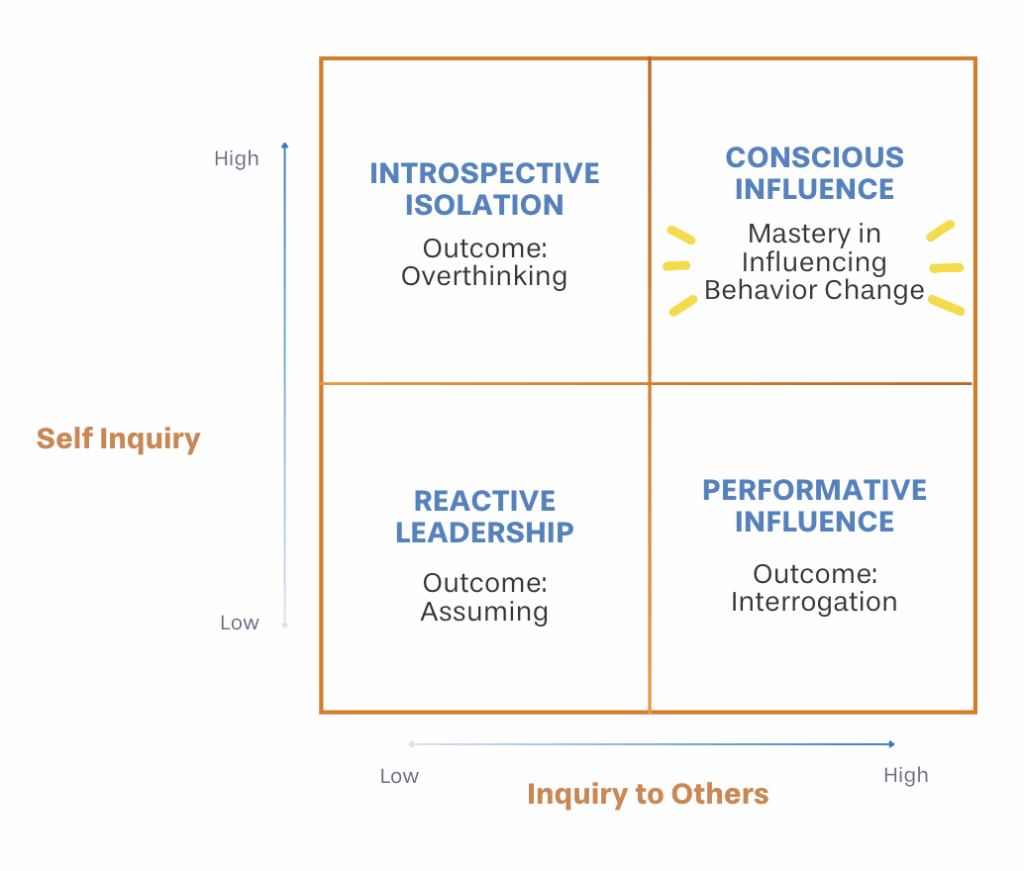
- Self Inquiry (Vertical): Your ability to reflect on your own beliefs, behaviors, and internal responses.
- Inquiry to Others (Horizontal): Your willingness to ask meaningful questions and seek input from those around you.
These two dimensions create four distinct leadership styles which are explained below.
1. Reactive Leadership
Low Inquiry to Self / Low Inquiry to Others
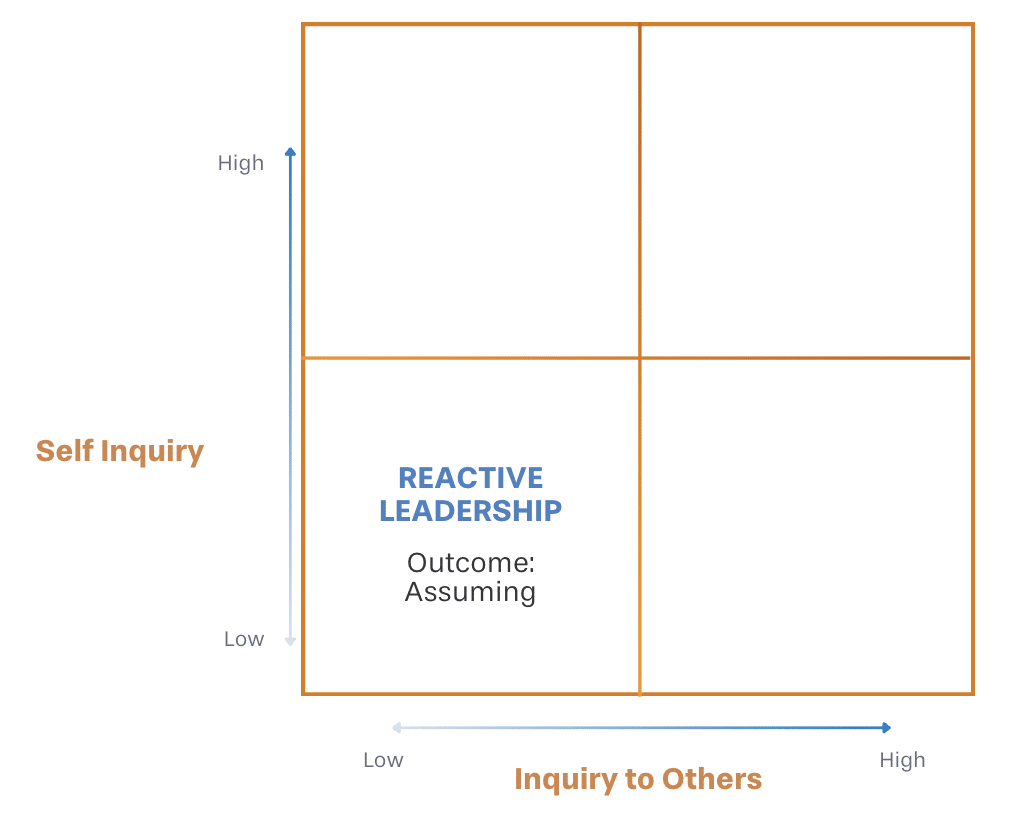
Outcome: Assuming
Leaders in this quadrant tend to operate on autopilot. They make fast decisions based on assumptions, avoid feedback, and focus on short-term problem-solving rather than strategic direction.
Common Traits:
- Skips reflection and resists feedback
- Makes decisions from urgency, not clarity
- Moves from one fire to the next without pause
- Creates team dynamics where trust and alignment are harder to sustain
3 Actions to Evolve Toward Conscious Influence:
- Pause before responding. Use a 3-second rule to breathe, reflect, and ask what’s truly needed.
- Ask “What don’t I know yet?” Regularly challenge assumptions by inviting diverse perspectives.
- Create a feedback loop. Set weekly check-ins with a peer or mentor for mutual reflection.
Research from Harvard Business Online shows that reflective leadership practices significantly improve decision-making, emotional intelligence, and long-term leadership effectiveness.
2. Performative Influence
Low Inquiry to Self / High Inquiry to Others

Outcome: Interrogation
Performative leaders often seek external validation and focus heavily on how they’re perceived. While they may appear engaged, their lack of internal alignment can lead to inconsistency or burnout.
Common Traits:
- Focuses more on perception than genuine connection
- Adapts messaging to please rather than lead with clarity
- Charisma is present, but alignment is inconsistent
- Misses opportunities for deeper self-inquiry and growth
3 Actions to Evolve Toward Conscious Influence:
- Journal daily with self-reflective prompts. Ask: “Where did I feel misaligned today?”
- Practice values check-ins. Before key actions, ask: “Does this reflect my core beliefs?”
- Block solo reflection time. Schedule 15–30 minutes weekly to unplug and self-inquire.
A 2023 study by Schoofs, Maunz, and Glaser found that authentic leadership, characterized by leaders’ self-awareness of their values and beliefs, positively influences team members’ authenticity, psychological need satisfaction, and self-actualization at work. These outcomes are strongly linked to improved team functioning and ethical decision-making.
3. Introspective Isolation
High Inquiry to Self / Low Inquiry to Others
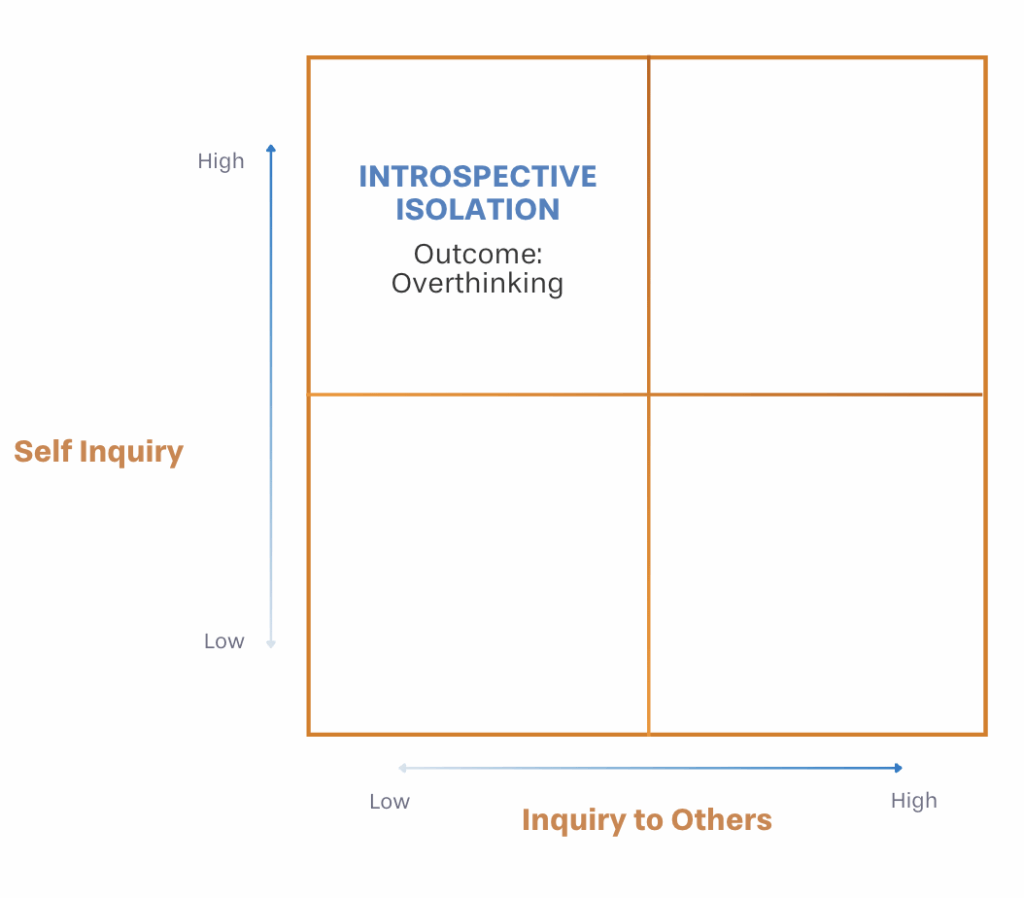
Outcome: Overthinking
This quadrant is common among high-performers who deeply reflect but struggle to engage others. Their inward focus can become a bottleneck, leading to hesitation and disconnect from team dynamics.
Common Traits:
- Insightful and values-driven, with strong internal clarity
- Hesitant to share ideas or engage in open collaboration
- May appear distant, overly analytical, or self-critical
- Tends to over-prepare and question decisions, slowing momentum
3 Actions to Evolve Toward Conscious Influence:
- Ask more questions in meetings. Try 3 open-ended questions per conversation.
- Schedule curiosity calls. Meet 1:1 with team members to hear their perspectives.
- Use “Ask Before Tell.” Make it a habit to seek input before offering solutions.
Research shows that structured peer inquiry significantly enhances collaboration and problem-solving. In a recent study by Karadag (2023), students who engaged in peer feedback demonstrated marked improvements in collaborative problem-solving skills, highlighting how inquiry-driven interaction strengthens collective thinking and effectiveness.
4. Conscious Influence
High Inquiry to Self / High Inquiry to Others
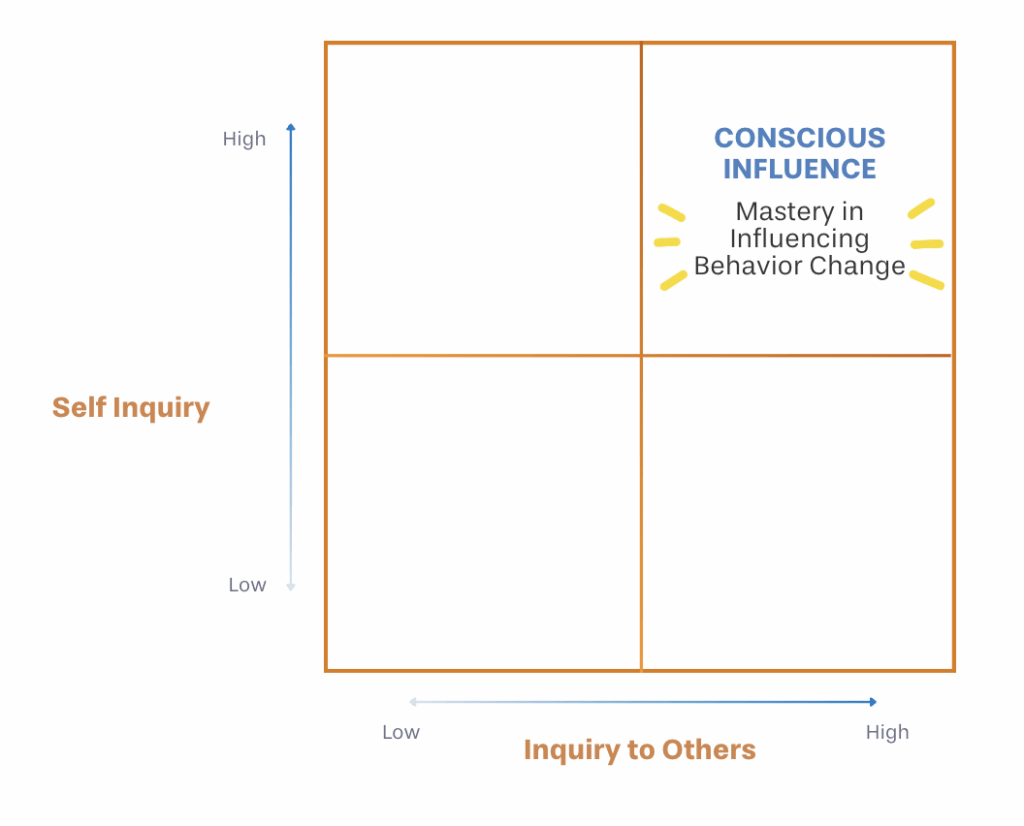
Outcome: Mastery in Influencing Behavior Change
This is the target zone for transformative leadership. Leaders here demonstrate curiosity, clarity, adaptability, and emotional intelligence. They balance inner alignment with external engagement to lead lasting, positive change.
Common Traits:
- Leads with thoughtful, open-ended questions, internally and with the team
- Shows confidence without ego, pairing clarity with empathy
- Communicates with flexibility while staying anchored in core values
- Makes decisions that consider both strategy and emotional impact
- Builds deep trust and inspires sustainable behavior change
Teams led by conscious influencers are more resilient, innovative, and aligned. They respond better to uncertainty, build deeper trust, and outperform peers in long-term strategy and morale.
Why Conscious Influence Now?
In today’s rapidly shifting landscape, the ability to lead with reflection, clarity, and connection isn’t just a leadership bonus, it’s a baseline requirement. As businesses navigate hybrid workplaces, rising burnout, and evolving employee expectations, traditional leadership models are falling short.
Recent data shows a crisis in how performance is being managed. According to ThriveSparrow, 85% of employees have considered quitting after receiving a performance review they perceived as unfair. Meanwhile, the Motivational Speakers Agency reports that only 15% of global employees feel actively motivated at work – a statistic that reflects systemic issues in leadership communication, engagement, and alignment.
This is exactly the gap Conscious Influence addresses.
By developing leaders who are equally attuned to their own beliefs (self-inquiry) and to the needs of others (inquiry to others), organizations can foster cultures of deeper trust, alignment, and purpose. Conscious Influence isn’t a theory, it’s a practical roadmap to showing up with intention and creating the kinds of relationships that fuel motivation, collaboration, and long-term success.
Ready to Step Into Conscious Influence?
Wherever you find yourself on this model, there’s always a path forward.
Explore further with these tools:
- Take the 3-Minute Leadership Report Quiz
- Download the Free Changes Playbook
- Book a Free Strategy Consultation
Let us know where you fall on the model and how we can help you move toward Conscious Influence.
Be well,
Michael Diettrich-Chastain
Founder, Arc Integrated